30 years leading professional manufacturer of bag-on-roll equipment in China
A restaurant client needs garbage bags that won't leak under wet food waste. A property management company wants bags that are easy for tenants to tie and carry. A warehouse operation prioritizes strength and cost-efficiency above all else.
These are different customers with different waste profiles. And they need different garbage bag formats.
If you manufacture garbage bags on roll, you have likely encountered this question: Should you offer drawstring bags, star seal bags, or both? The answer depends not on which is "better," but on which matches your customers' specific waste handling requirements and your production economics.
This article compares drawstring and star seal garbage bags across four dimensions — structural design, strength and leak resistance, ease of use, and cost — to help you decide which format belongs in your product line.
The difference between drawstring and star seal garbage bags is not cosmetic — it is structural and operational. Understanding this structural difference is the foundation for choosing the right format.
Drawstring garbage bags feature built-in cords along the top edge that allow users to pull, cinch, and tie the bag closed. The bottom is typically a flat seal — a straight seam across the bag width. This design prioritizes convenience and cleanliness at the point of disposal.
Star seal garbage bags have a star-shaped seal at the bottom, formed by folding the film evenly around the base. The film is gathered and sealed in a single spot, creating a star-like pattern when laid flat. This design prioritizes strength and load capacity.
| Feature | Drawstring Bag | Star Seal Bag |
|---|---|---|
| Top closure | Built-in drawstring cord along reinforced rim | Standard open top; requires manual tying |
| Bottom seal | Typically flat seal (straight seam) | Star-shaped pattern; film gathered and sealed at the center |
| Primary design priority | Convenience and hygiene | Strength and durability |
| Best for | Dry, light-to-medium waste | Wet, heavy, or irregular waste |
Star seal bags have greater vertical strength because the underside of the bag is gathered, folded, and sealed at the centre of the base. The design eliminates the weak points found in other types of seals, reducing the risk of leaks.
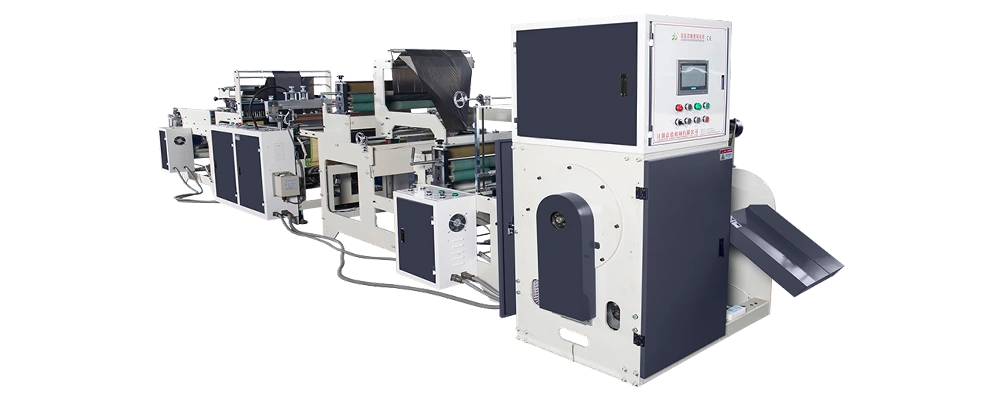
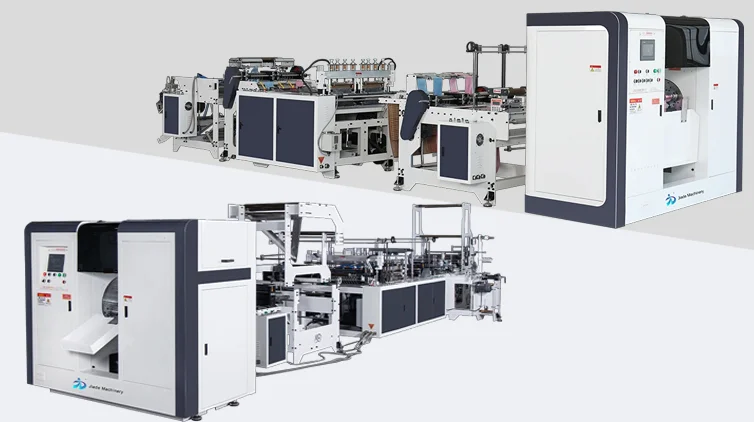
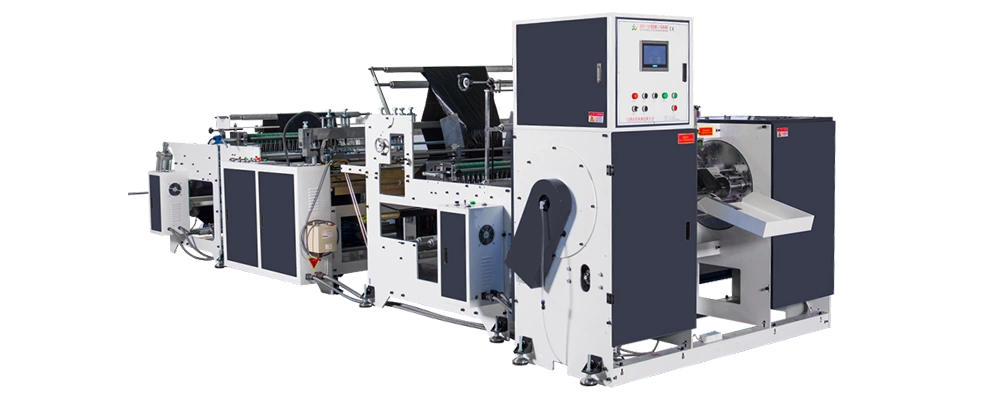
For converters producing garbage bags on roll, the machine platform must support the specific sealing and forming requirements of each bag type. See the technical overview of bag on roll making machines with Delta-integrated control and quick-change capability.
Strength and load capacity are where Star Seal bags have a clear advantage.
Star seal bags distribute weight and stress evenly across the bottom. This structural difference is the main reason star seal bags outperform flat-bottom designs under weight. For heavy or wet trash, Star Seal bags consistently outperform.
Drawstring bags, in contrast, have stress concentrated at the bottom corners, increasing the risk of leaks under heavy load. They are best suited for lighter waste.
Leak resistance is another critical differentiator.
Star seal bags minimize bottom stress points and reduce leakage risk. The star seal design eliminates sharp corners where liquids can pool and escape. This makes them particularly effective for food waste, healthcare waste, and other wet applications.
Drawstring bags can leak at corners under pressure and are better suited for dry waste.
| Performance Metric | Drawstring Bag | Star Seal Bag |
|---|---|---|
| Load capacity | Moderate | High |
| Leak resistance | Moderate (dry waste only) | Excellent (wet waste capable) |
| Tear resistance | Moderate | High — even weight distribution reduces tearing |
| Best waste types | Paper, packaging, light food scraps | Food waste, liquids, heavy items, and sharp objects |
Star seal bags are specifically designed for heavier-duty tasks, distributing weight evenly and preventing leaks and tears.【5†L11-L14 from earlier reference】 They are perfect for disposing of wet or heavy waste.
If strength is the star seal's domain, convenience is the drawstring's strength.
Drawstring bags allow users to pull the cords, cinch the bag closed, and carry it to disposal without touching the waste. Key benefits include:
Fast tying and removal — one simple pull closes the bag
Comfortable carrying — the cords serve as handles
Cleaner handling — no direct contact with waste
Odor control — the closure helps contain odors inside the bag
Star seal bags, in contrast, require manual tying and slightly more handling time. However, they are more durable during transport.
The labor trade-off: Drawstring bags save time at the point of disposal — ideal for environments where staff or residents handle their own waste. Star seal bags save time (and money) by reducing failures, leaks, and the need for double-bagging — ideal for high-volume commercial operations.
Star seal bags also use material more efficiently — a star seal bag can often use thinner film while maintaining high strength, reducing plastic usage per bag. Drawstring bags often require thicker film to compensate for the flat bottom stress.
Cost is a critical factor for converters and their customers.
| Cost Factor | Drawstring Bag | Star Seal Bag |
|---|---|---|
| Material usage | Higher — requires cords and often thicker film | Lower — can use thinner film for equivalent strength |
| Per-unit cost | Higher | Lower |
| Failure cost | Moderate risk of leaks under heavy load | Low risk of leaks and tears |
| Long-term value | Best for convenience-focused applications | Best for high-volume, heavy-use operations |
For high-volume operations, star seal bags offer better long-term value. They reduce bag failures, prevent product damage or contamination, and save labor time spent on cleaning or double-bagging.
Drawstring bags, while higher in per-unit cost, serve markets where convenience and hygiene justify the premium.
For converters serving the garbage bag market where both drawstring and star seal options are common, see the garbage bag machine line for application-specific configurations and material compatibility details.
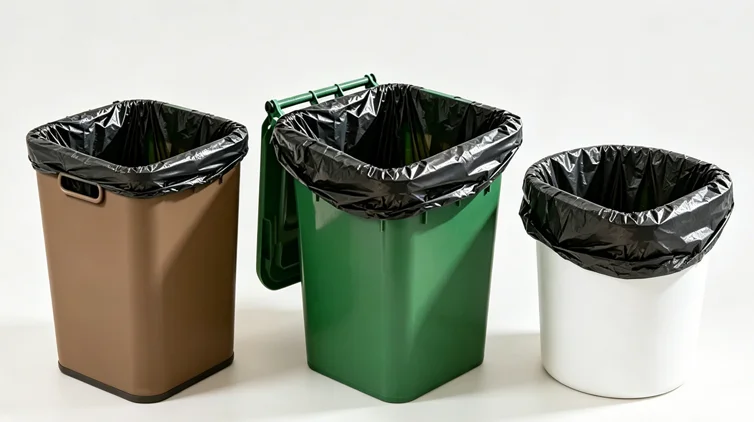
Below are three common customer profiles. Identify which matches your order book, then follow the recommendation.
Typical customers: Households, offices, apartments, property management
Waste type: Dry to medium; food scraps, packaging, paper
Priority: Easy to use, clean to handle, odor control
Recommendation: Drawstring garbage bags — convenience and hygiene are the primary value propositions
Drawstring trash bags are commonly used in households, offices, restaurants, hotels, and industrial settings where quick and hygienic waste handling is essential.
Typical customers: Restaurants, commercial kitchens, hospitals, warehouses
Waste type: Wet, heavy, sharp, or irregular
Priority: Leak resistance, load capacity, durability
Recommendation: Star seal garbage bags — strength and versatility for various waste types
Star-sealed bags are widely used in supermarkets, restaurants, hotels, and offices, where large volumes and diverse types of waste are generated. If you prioritize strength and versatility to handle various types of waste, star-sealed bags are the right choice.
Typical customers: Distributors supplying multiple customer segments
Priority: Ability to serve both convenience-driven and strength-driven markets
Recommendation: Evaluate producing both formats — drawstring for residential/commercial convenience, star seal for food service, and industrial strength
Use this checklist to evaluate which garbage bag format belongs in your product line.
Why: End-use determines format requirement. Dry/light waste → drawstring may suffice. Wet/heavy waste → star seal is likely required.
How to document: Ask your top 10 customers: "What percentage of your waste is wet or heavy? Do you currently experience leaks or bag failures?"
Why: Drawstring bags save labor at disposal (easy tying and carrying). Star seal bags save labor by reducing failures and cleanup.
How to document: Ask customers: "Do you prioritize ease of disposal (drawstring) or leak prevention and durability (star seal)?"
Why: Drawstring bags cost more per unit. Star seal bags cost more than flat seal but less than drawstring.
How to document: Survey customers: "Would you pay a premium for drawstring convenience? For star seal strength?"
Why: Star seal bags can use thinner film for equivalent strength, potentially reducing material cost. Drawstring bags require additional cord material.
How to document: Calculate material cost per 1,000 bags for each format at your target thickness.
Why: Offering both formats may require additional production capability or changeover time.
How to document: Speak with your top 5 customers. Ask: "What annual volume of drawstring bags would you order? Of star seal bags?"
Once you have documented the five steps above — especially customer waste profiles, labor priorities, and volume projections — you can translate your order mix into specific production decisions.
| If your customer profile looks like… | Then consider… | Key considerations |
|---|---|---|
| Households, offices, and property management | Drawstring bag production | Drawstring insertion accuracy, cord quality, and consistent sealing |
| Restaurants, healthcare, and industrial | Star seal bag production | Precision gathering station, consistent seal formation, and material efficiency |
| Mixed portfolio with sufficient volume for both | Separate production lines | Each line is optimized for its format |
| Mixed portfolio with moderate volume for each | Flexible machine platform | Quick-change tooling, recipe storage for different formats |
If you're looking for convenience, cleanliness, and neatness, drawstring trash bags are the best option. If you prioritize strength and versatility to handle various types of waste, star-sealed bags are the right choice.
The following topics extend the drawstring vs star seal comparison into related equipment and material decisions:
Drawstring or Star Seal Roll Bag Machine?
C‑Fold or Star Seal Roll Bag Maker for You?
Material Selection for High‑Speed Roll Bag Lines
Sealing and Cooling in Roll Bag Production
5 Tips to Pick a Bag on Roll Machine




.webp)