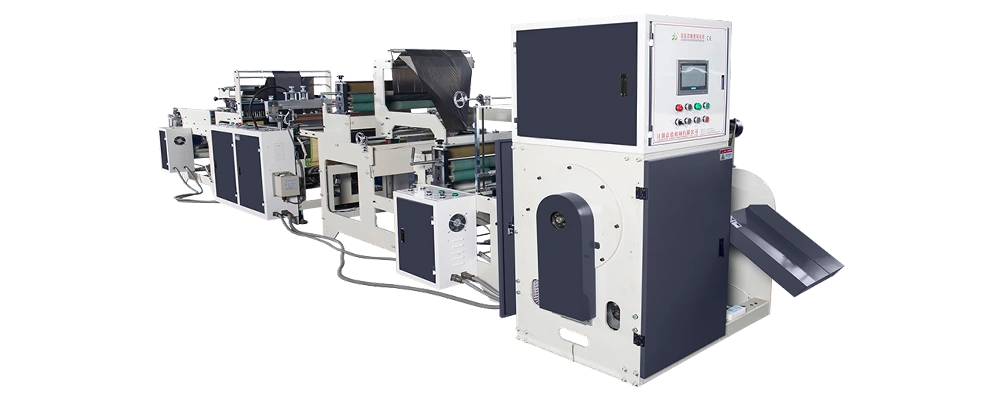
30 years leading professional manufacturer of bag-on-roll equipment in China
If you are sourcing roll‑fed bag converting equipment, the first thing to understand is that the folding geometry dictates everything downstream. C‑Fold and Four‑Fold are not interchangeable marketing terms. They determine packing density, the core size of the finished roll, and ultimately how many bags fit inside a standard corrugated carton. A bag on roll making machine configured for C‑Fold stacks bags in a bi‑panel overlap, creating a slight ridge along one edge. A Four‑Fold configuration tucks both gussets inward twice, yielding a flat, book‑like profile with no raised seam. The practical difference? Four‑Fold rolls can pack up to 15–20% more bags per carton, slashing freight costs for converters shipping container loads to North American or European distribution centers .
I have walked factory floors where a seemingly minor change from C‑Fold to Four‑Fold rewinding cut shipping cube by nearly a fifth. That is real money when you are moving forty containers a year. Yet the decision is not always straightforward. Let's dissect what these configurations actually mean for your operation.
Walk into any packaging converter and you will see rows of finished rolls waiting for shipment. Look closely at the end profile of those rolls. C‑Fold bags have an unmistakable asymmetry. The film is folded once, then folded again with an overlap. This creates a thicker side edge and a thinner opposite edge. When wound under tension, the roll develops a slight cone shape if the rewinding tension is not perfectly calibrated.
Four‑Fold bags, by contrast, are symmetrical. Both side gussets are folded inward twice, meeting precisely at the centerline. The resulting profile is uniform from edge to edge. For automated dispensing systems used in grocery produce sections or retail checkout, this uniformity translates to smoother unwinding with fewer snags.
The real engineering challenge lies in the folding station itself. On older mechanical machines, changing from one fold type to another could eat half a shift. Modern servo‑driven systems store fold recipes digitally, allowing changeover in under fifteen minutes. If your production mix spans both configurations, this capability deserves serious scrutiny.
I once audited a converter who was losing six figures annually to air. They were shipping C‑Fold rolls in cartons sized for Four‑Fold density. Every container had hundreds of cubic feet of wasted space. That is freight cost with zero value.
Let's put numbers to the problem. A standard master carton measuring 600mm × 400mm × 400mm might hold:
| Fold Type | Rolls per Carton (typical) | Bags per Roll | Total Bags per Carton |
|---|---|---|---|
| C‑Fold | 8 | 1,500 | 12,000 |
| Four‑Fold | 10 | 1,500 | 15,000 |
The 25% gain in carton efficiency compounds across every pallet, every truck, every shipping lane. For e‑commerce fulfillment centers receiving these rolls by the thousands, that density difference dictates warehouse slotting and replenishment frequency.
Waste reduction is the other silent factor. Four‑Fold rolls exhibit less telescoping during transit. When a roll telescopes, the outer layers slide sideways, damaging bags and rendering the outermost wraps unusable. Nobody enjoys crediting customers for telescoped inventory.
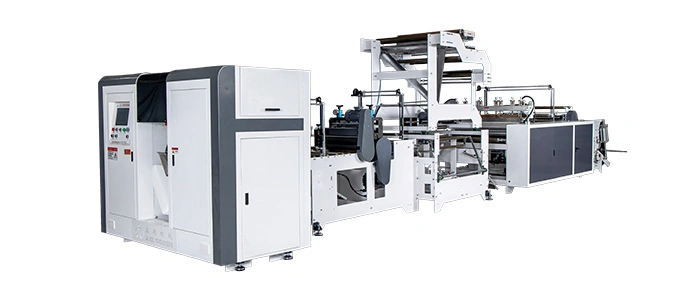
Despite the density advantage of Four‑Fold, C‑Fold retains legitimate applications. Small‑batch converters serving local markets with short shipping distances may never recoup the added capital cost of a Four‑Fold capable machine. The C‑Fold folding mechanism involves fewer moving parts. Maintenance crews can troubleshoot it faster. When a folding plate wears, replacement is straightforward and inexpensive.
There is also the matter of film gauge. Ultra‑thin films below 10 microns can buckle unpredictably during the double fold required for Four‑Fold geometry. I have seen wrinkling defects appear at the fold line when running high‑slip additives or certain recycled content blends. In these edge cases, C‑Fold may be the only viable option without reformulating the film structure.
Certain point‑of‑sale applications actually prefer C‑Fold because the thicker edge provides a natural gripping point for manual dispensing. Butcher shops and deli counters often favor this tactile cue. It is a niche consideration, but it matters to the end user who handles these rolls hundreds of times daily.
Regardless of fold type, the rewinding shaft and tension control define roll quality. A beautifully folded bag stack means nothing if the rewinding tension oscillates during winding. You get soft centers and rock‑hard exteriors. Or worse, the opposite: tight cores that crush inner layers and soft exteriors that telescope the moment a forklift jostles the pallet.
Modern servo‑driven rewinding with closed‑loop tension feedback solves this. The system continuously measures roll diameter and adjusts torque accordingly. For operations running printed film with registered artwork, photocell tracking must remain synchronized through the folding station to prevent drift. On multi‑line machines producing two or four rolls simultaneously, independent tension zones are not a luxury—they are a requirement for consistent output .
The fold debate sits within a larger matrix of machine specification decisions. Buyers evaluating a bag on roll making machine must also weigh:
Single‑line versus multi‑line production. A two‑line configuration effectively doubles throughput without doubling floor space. For converters supplying high‑volume retail accounts, this is often the economic sweet spot . The folding mechanism must maintain precise registration across all lines simultaneously. Misalignment on one line means scrapping production from all lines until corrected.
Perforation type. Bags on roll require easy‑tear perforations that separate cleanly without tearing into the bag body. Rotary pin perforation and hot‑needle perforation produce different tear characteristics. The folding geometry influences perforation placement. Four‑Fold bags typically position perforations at the fold crease, while C‑Fold bags may place them slightly offset to prevent accidental tearing during unwind.
Core versus coreless winding. Some dispensing systems require paper cores; others use coreless rewinding to eliminate core waste and reduce roll change frequency. Four‑Fold geometry tends to maintain structural integrity better in coreless configurations because the flat profile distributes compressive forces evenly.
The question ultimately circles back to your customer base. Are you shipping predominantly to retail chains with automated bag dispensers? Those systems are engineered for Four‑Fold roll uniformity. Supplying C‑Fold rolls to these accounts will generate complaints and potential returns.
Are you a job‑shop converter serving diverse local businesses? Flexibility may outweigh pure throughput. Some equipment manufacturers offer modular folding stations that accommodate both fold types with minimal changeover time. If your order mix varies week to week, this configurability becomes a competitive asset rather than a compromise.
The North American market has largely standardized on Four‑Fold for retail produce and checkout applications. European buyers show more variation by country. Emerging markets in Southeast Asia and Latin America still use substantial volumes of C‑Fold configurations, particularly in traditional markets where manual dispensing remains common.
I have learned the hard way that a machine's specification sheet tells only half the story. The other half is how the manufacturer responds when your film formulation changes or your operator discovers an intermittent fold misalignment at 3 AM.
Look for suppliers who offer remote diagnostics capabilities. Modern PLC systems can transmit fault codes and operational telemetry directly to factory engineers. This cuts mean time to resolution from days to hours. Also verify the availability of folding plates in the specific dimensions your product range requires. A standard plate set may not accommodate unusual bag widths or gusset depths without custom fabrication.
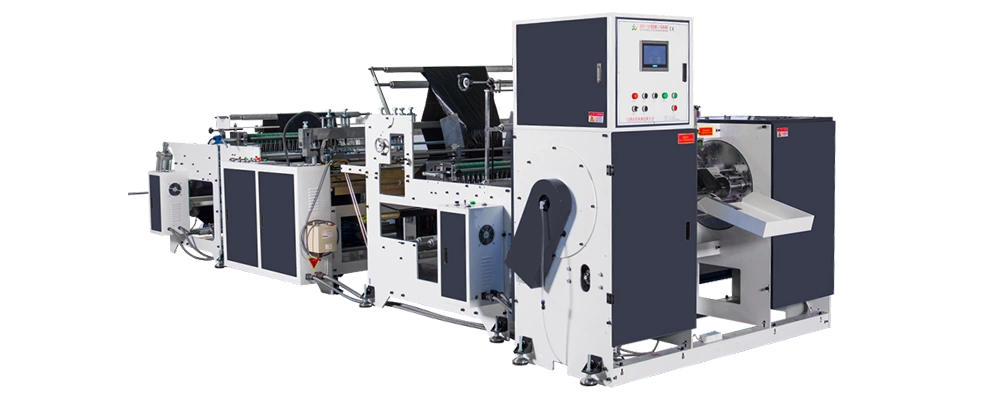
Jiade's engineering team addresses these variances through application‑specific folding station design. Rather than forcing every production scenario into off‑the‑shelf tooling, the approach adjusts fold plate geometry and entry angles to match your film characteristics and finished roll specifications. For operations considering this equipment class, reviewing the modular configuration options provides clarity on what your specific production mix demands.
The choice between C‑Fold and Four‑Fold ultimately distills to an economic calculation: shipping density and dispensing performance versus capital outlay and operational simplicity. For high‑volume converters serving retail chains, the Four‑Fold advantage compounds meaningfully. For niche applications and short‑run flexibility, C‑Fold remains a viable and cost‑effective solution. Whichever path you choose, ensure the rewinding and tension control architecture can maintain roll integrity across your entire product portfolio.




.webp)