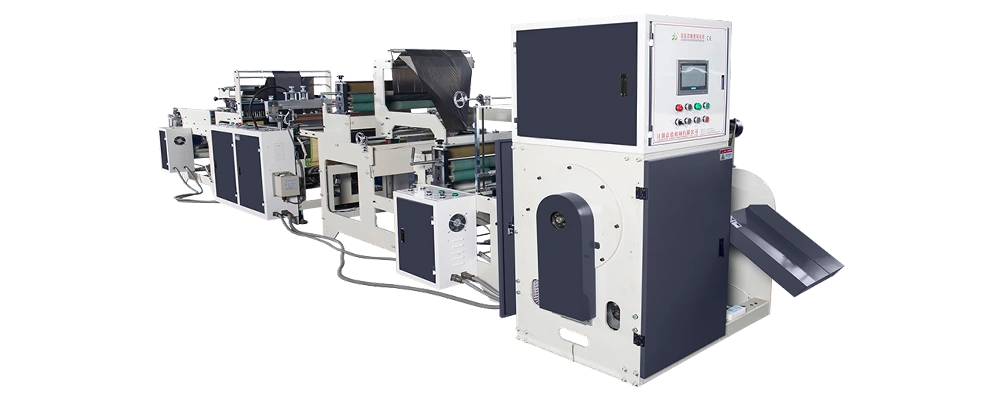
30 years leading professional manufacturer of bag-on-roll equipment in China
Your C-F machine is rated for 200 bags per minute. But with your current film, you run at 150 — seals leak, rolls block, or perforations tear through. The machine is not the bottleneck. The material is.
Different roll bag machine designs place different demands on film properties. A drawstring bag line stresses seal strength and puncture resistance. A four-fold bottom seal machine needs stiffness for standing pouches. A fresh-keeping bag line requires softness for clean perforation and tight winding.
This article matches PE resin types — LDPE, LLDPE, HDPE, and recycled blends — to specific high-speed roll bag applications. Use it to select the right material for your machine series and order mix.
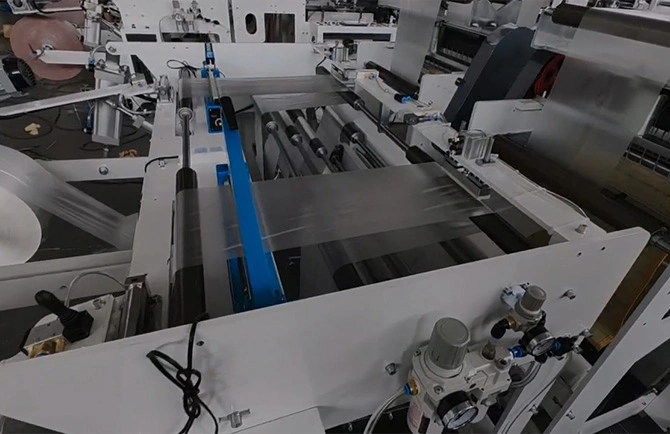
Drawstring bags combine three challenges: strong seals around the drawtape channel, clean perforations, and roll winding that prevents blocking. At speeds above 150 bags/minute, LDPE alone struggles.
Why LLDPE is preferred for high-speed drawstring production:
| Property | LDPE | LLDPE | Impact on Drawstring Bag Production |
|---|---|---|---|
| Melt strength | Moderate | High | LLDPE resists sagging during seal formation |
| Crystallization speed | Slower | Faster | LLDPE cools faster, reducing roll blocking |
| Puncture resistance | Lower | Higher | Critical for drawtape insertion zone |
| Sealing window width | Wide | Narrower but strong | LLDPE requires precise temperature control |
According to a 2024 film extrusion guideline from Plastics Europe, converters running drawstring bags on high-speed lines report 20% fewer seal-related rejects when using LLDPE or LLDPE-rich blends (70/30 LLDPE/LDPE) compared to pure LDPE, with no significant increase in material cost per usable bag.
Practical recommendation for drawstring lines: Start with a 70/30 LLDPE/LDPE blend for standard household garbage bags (15-25 microns). For heavy-duty drawstring bags (40+ microns), increase LLDPE to 85% or use a pure LLDPE film with a melt flow index (MFI) of 0.8-1.2 g/10min.
Drawstring bag machines are designed with servo tension control to handle LLDPE's narrower sealing window. See the garbage bag production line specifications and material compatibility.
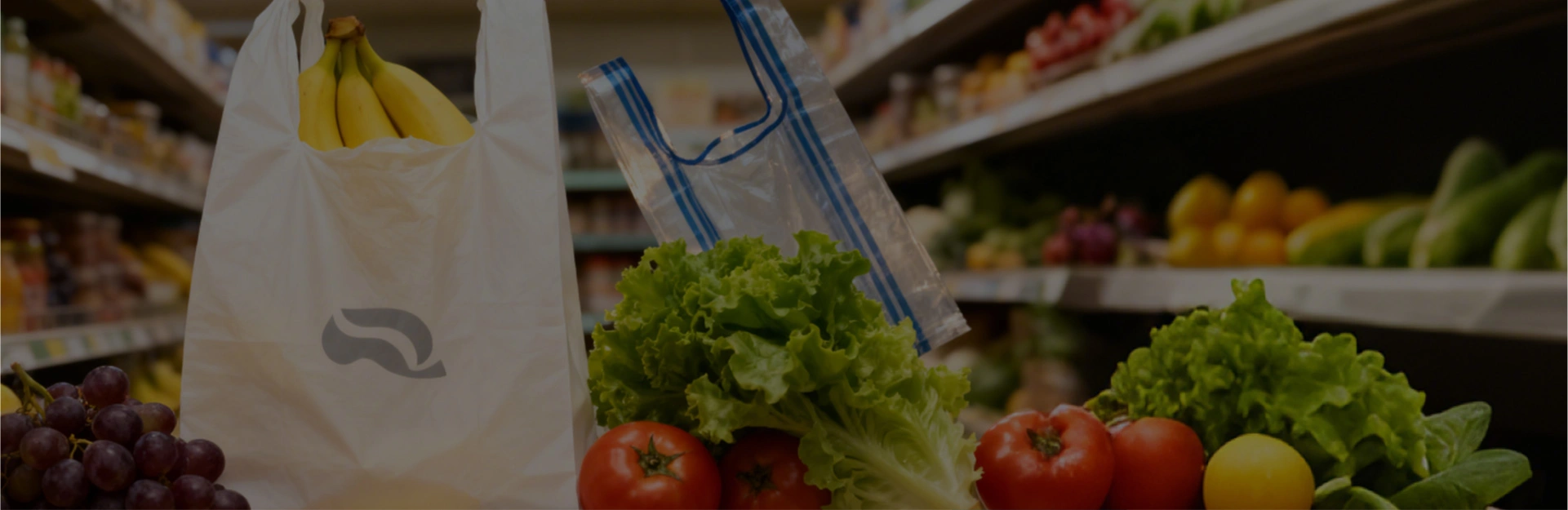
C-F bag machines are the industry standard for T-shirts and flat bags on roll. They prioritize maximum output — often 200+ bags per minute. At these speeds, material must provide a forgiving sealing window while maintaining roll integrity.
Three material paths for C-F lines:
| Material Path | Best For | Speed Impact | Seal Quality | Cost Position |
|---|---|---|---|---|
| HDPE dominant (70%+) | Ultra-thin bags (8-12µ), highest piece count | Maximum speed | Stiffer seal, can be brittle | Lowest material cost |
| LDPE/LLDPE blend (50/50) | General retail bags (15-20µ), mixed orders | 5-10% below max | Strong, flexible seals | Moderate |
| LLDPE with HDPE (40/60) | Bags requiring both strength and thinness | 0-5% below max | Balanced | Slightly above HDPE |
A 2023 benchmarking study published in Polymer Testing (Elsevier) found that C-F machines running 50/50 LDPE/LLDPE blends achieved 94% of their maximum rated speed with seal failure rates below 0.5%, while HDPE-dominant films achieved 99% speed but with seal failure rates above 2% — making the blend more profitable for mixed-order facilities.
Practical recommendation for mixed-order C-F lines: Keep two material recipes. Run 70% HDPE for long, single-SKU orders of thin shopping bags where maximum speed drives profit. Run a 50/50 LDPE/LLDPE blend for mixed orders with frequent changeovers — the wider sealing window reduces setup time and scrap.
For converters running both drawstring and C-F bags, consolidating material types simplifies inventory. See how shopping bag making machine configurations handle different material blends.
Four-fold bottom seal machines produce stand-up pouches and flat-bottom bags for retail shelves. These bags require stiffness to stand upright, good optics for printing, and strong bottom seals that survive filling and transport.
The material challenge at high speed: Stiff films (high HDPE content) often seal poorly. Flexible films (high LDPE) produce weak standing pouches.
Recommended material approach:
Base layer: 60-70% LLDPE for seal strength and toughness
Stiffness modifier: 20-30% MDPE (medium-density polyethylene) or a specific HDPE grade
Processing aid: 5-10% LDPE to widen the sealing window
Why this works: MDPE provides the bending stiffness needed for stand-up pouches without the brittleness of high-HDPE blends. The LLDPE ensures bottom seals survive filling line impact. LLDPE's faster crystallization (compared to LDPE) also reduces blocking in the wound roll — a common complaint with four-fold bags.
What to avoid: Do not use more than 30% HDPE in four-fold bag films running above 120 bags/minute. The seal failure rate becomes unpredictable, and roll blocking increases significantly.
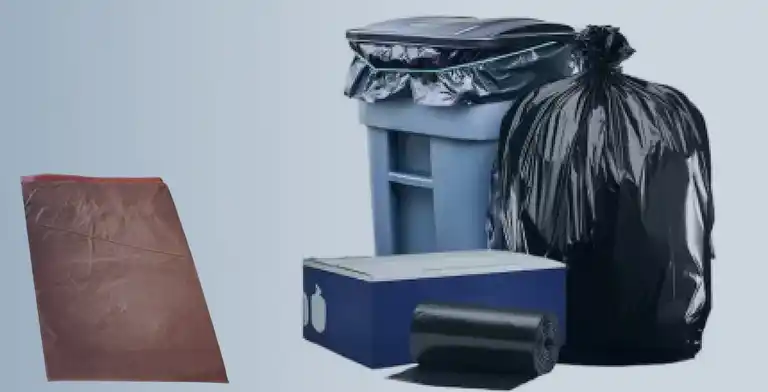
Fresh-keeping bags — produce bags, freezer bags, sandwich bags — have three critical requirements: clean perforations that tear easily but not prematurely, tight core winding without telescoping, and sufficient softness for consumer dispensing.
Material priorities for fresh-keeping lines:
| Requirement | Material Solution | Why It Matters at High Speed |
|---|---|---|
| Easy-tear perforation | LDPE or LDPE-rich blend (70%+ LDPE) | LDPE's lower stiffness produces cleaner perforation breaks |
| Tight, non-blocking rolls | Add 20-30% LLDPE | LLDPE's faster cooling prevents layer adhesion |
| Static control | Antistatic additive package | Reduces film cling on the winding station |
The trade-off: Pure LDPE runs well at moderate speeds (120-150 bags/minute) but causes roll blocking above 180 bags/minute. Adding 20-30% LLDPE raises the blocking-free speed limit to 220+ bags/minute, with minimal loss of softness.
High-speed roll bag lines can handle recycled polyethylene (rPE), but the practical limit varies by bag type and machine series.
| Machine Series | Practical rPE Limit (High-Speed) | Primary Risk Beyond Limit |
|---|---|---|
| C-F (thin shopping bags) | 15-20% | Seal contamination; brittle perforations |
| Drawstring (garbage bags) | 25-30% | Drawtape channel contamination |
| Four-fold (stand-up pouches) | 10-15% | Reduced stiffness; unpredictable bottom seals |
| Fresh-keeping (produce bags) | 10% | Perforation quality declines sharply |
A 2025 technical update from The Association of Plastic Recyclers (APR) confirmed that high-speed roll bag lines (180+ bags/minute) running more than 25% post-consumer recycled content required cooling zone extensions of 15-20% to maintain seal integrity and prevent blocking.
Practical recommendation: If your order book requires high recycled content (30%+), reserve it for thicker bag applications (garbage bags above 30 microns) and run them on drawstring or heavy-duty C-F lines at moderate speeds (140-160 bags/minute). Do not run high-recycled-content films on fresh-keeping or high-speed thin-gauge lines.
Once you have matched your material — LLDPE for drawstring, LDPE/LLDPE blends for C-F, MDPE-inclusive blends for four-fold, or LDPE-rich for fresh-keeping — the next question is whether your bag on roll machine has the configuration to run it reliably.
Three machine features determine material flexibility at high speed:
Sealing system adjustability – Wide temperature range and pressure control for LLDPE's narrower window
Servo-driven tension control – Prevents film break when running recycled content with variable melt flow
Cooling zone length – Longer cooling enables LLDPE and rPE blends at full speed
Modern roll bag machines integrate control systems with recipe storage for different material types, allowing operators to recall temperature, tension, and cooling presets for each resin blend.
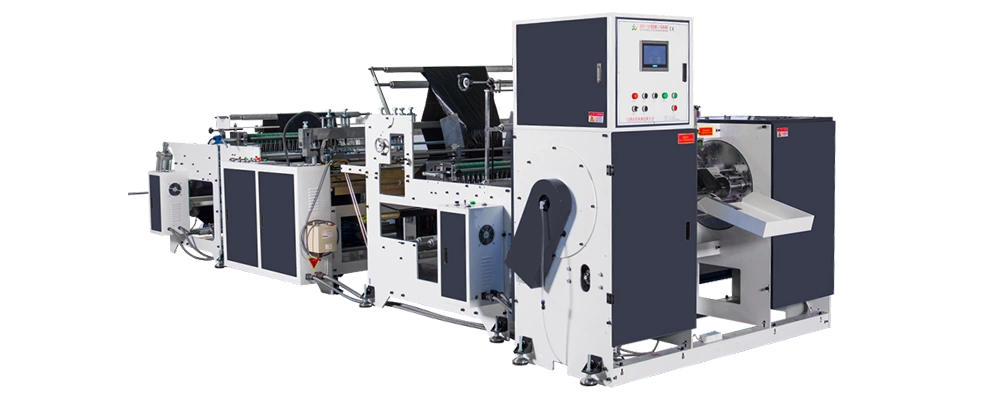
To see how specific machine configurations accommodate different material strategies — including recycled content up to 40% — review the technical specifications of bag on roll making machine with quick-changeover capability.
The following topics extend material selection into practical testing and equipment capability:
Sealing and Cooling in Roll Bag Production
Testing Recycled Content Consistency In-House
Drawstring Bag Production: Material and Machine Integration
Perforation Quality Optimization for Fresh-Keeping Roll Bags
Total Cost of Ownership for Recycled Material Capability



.webp)