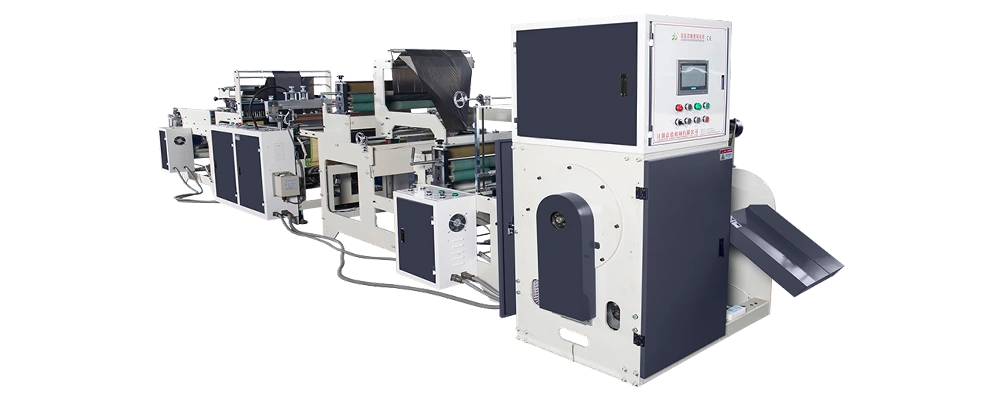
30 years leading professional manufacturer of bag-on-roll equipment in China
You have decided to invest in a bag on roll making machine. Perhaps you are expanding from flat bags to roll formats. Perhaps you are replacing an aging line. Perhaps you are entering the garbage bag, shopping bag, or specialty bag market for the first time.
Whatever your situation, you face a flood of specifications: bags per minute, web width, sealing types, lane configurations, automation levels. The challenge is not finding a machine that works. It is finding the machine that works for your specific order mix — your bag types, your materials, your changeover frequency, your operator skill level, and your long-term business goals.
This guide offers a structured six-step framework to help you evaluate bag on roll making machines. Each step translates a technical specification into a business decision.
Many buyers begin by comparing maximum speed specifications. That is a mistake. Speed means nothing if the machine cannot handle your bag types or materials without excessive downtime.
What to document before contacting any supplier:
| Document | Why It Matters |
|---|---|
| Top 5 bag types by volume | Different bag styles — C-F bags, four-fold bottom seal bags, fresh-keeping bags, drawstring bags, star-seal bags — require different sealing, folding, and gathering configurations |
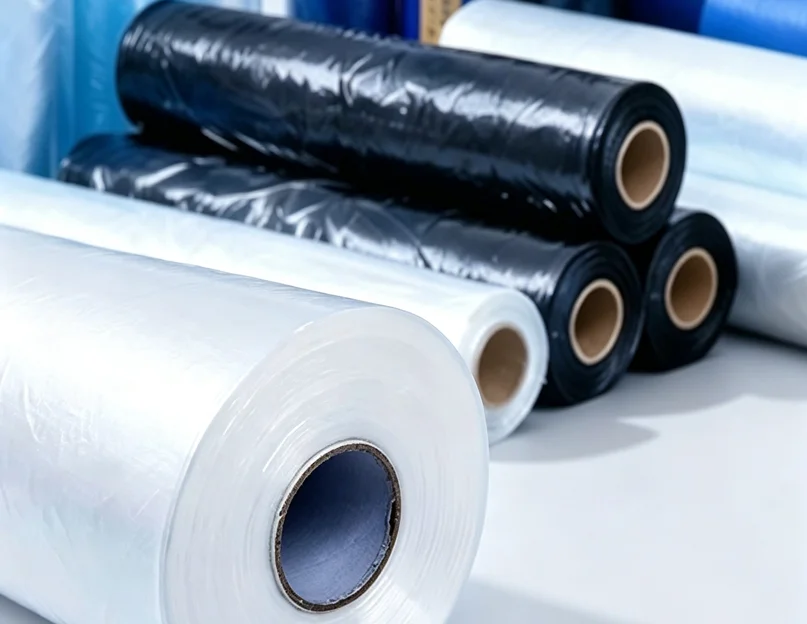
| Film types and thickness range | HDPE, LDPE, recycled materials, and biodegradable plastics each affect sealing temperature, tension control, and winding behavior |
| Weekly SKU count | More SKUs mean more changeovers. If you run many bag types per week, quick-change tooling and recipe storage become critical |
| Average order quantity | Long runs favor high-speed single-purpose lines. Short runs favor flexible, quick-change platforms |
The practical takeaway: A machine rated for high speed may be perfect for long runs of a single bag type. But if you run multiple different bag sizes and styles per week, a slightly slower machine with quick changeover capability will deliver more usable output and higher profitability.
To understand how different roll bag machine platforms handle quick changeover and material flexibility, see the technical overview of bag on roll making machine with Delta-integrated control and recipe storage.
Bag on roll making machines are not one-size-fits-all. Different machine series are optimized for different bag types. Understanding which series aligns with your product mix is essential.
Common machine series and their applications:
| Machine Series | Primary Bag Types | Key Features |
|---|---|---|
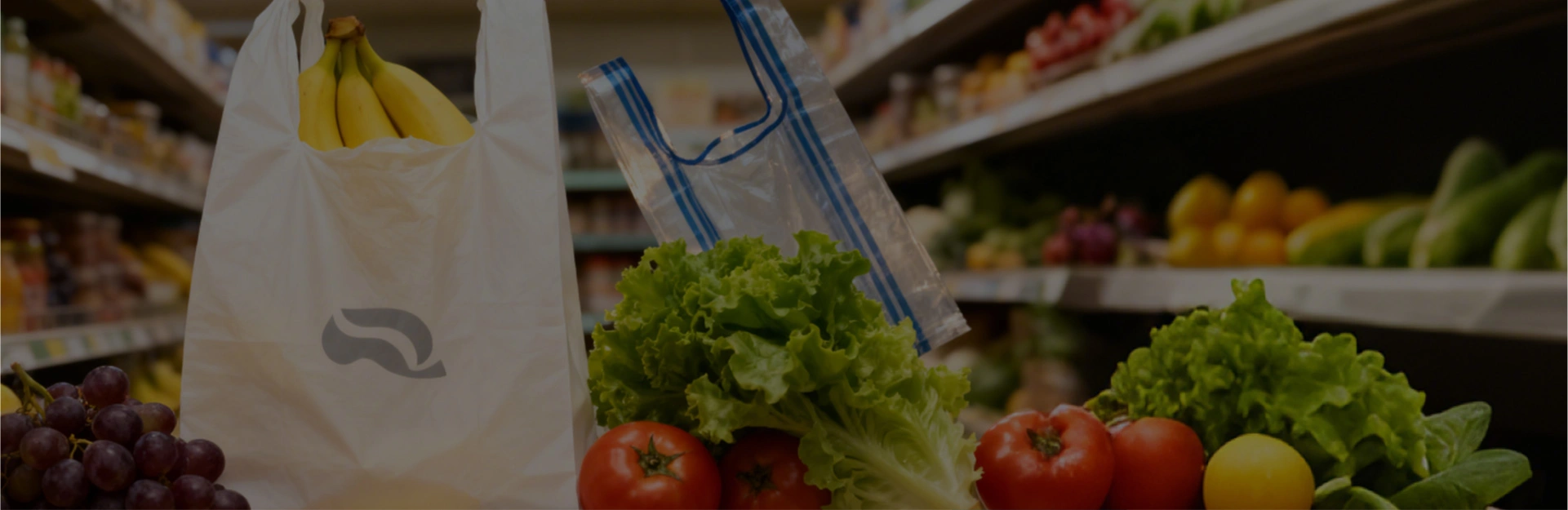
| C-F Bag Making Machine | T-shirt bags, flat bags on roll | Industry standard for high-volume shopping and grocery bags |
| Four-Fold Bottom Seal Bag Machine | Stand-up pouches, flat-bottom bags | Creates premium retail packaging with superior shelf appeal |
| Fresh-Keeping Bag on Roll Machine | Perforated roll bags for produce, supermarkets, kitchens | Precision perforation and reliable core winding |
| Drawstring Bag Making Machine | Drawstring trash and garbage bags | Convenient, easy-to-close closure design |
| Star-Seal Bag Making Machine | Star-seal flat bags, star-seal T-shirt bags | Specialized for heavy-duty and wet waste applications |
The practical takeaway: If your primary business is supermarket shopping bags, a C-F bag making machine is the logical starting point. If you serve the fresh produce market, a fresh-keeping bag machine with precision perforation is more appropriate. If you produce garbage bags for residential, commercial, or industrial use, drawstring or star-seal machines may be the right fit.
Automation is not a binary choice. Machines range from basic configurations to fully automatic systems with servo-driven tension, auto core insertion, and touchscreen recipe management.
Three automation levels — and who they fit:
| Automation Level | Typical Applications | Best For | Trade-off |
|---|---|---|---|
| Semi-automatic | Small runs, startups | Limited capital, lower volume | Higher labor cost per bag; more operator skill required |
| Fully automatic (single line) | Established operations, moderate volume | Consistent quality, reduced labor dependency | Higher capital cost |
| Fully automatic (double line) | High-volume production | Maximum output, multiple lanes | Highest capital cost; requires more floor space |
Fully automatic machines eliminate manual film feeding, sealing adjustment, cutting, and stacking — integrating the entire process into one streamlined operation. This reduces film waste and human error while enabling consistent quality at scale.
The PLC program co-developed with Delta offers a more convenient user experience in practical applications. Features such as one-touch speed adjustment, one-touch bag type switching, and one-touch bag size switching significantly reduce setup time and operator training requirements.
The practical takeaway: Do not over-automate. A fully automatic double-line machine is impressive, but if your volume does not justify it, the additional capital cost and maintenance complexity will erode your margins. Start with your actual daily output target, then choose the automation level that meets it.
Not all bag on roll machines handle all films equally. Material compatibility is not a "yes/no" checkbox — it is a range.
What to verify with your film supplier and the machine manufacturer:
Film thickness range: Machines are designed for specific thickness ranges. For example, some four-fold bag machines handle 0.006–0.025mm, while others handle 0.01–0.05mm. Drawstring machines may support HDPE from 0.006–0.04mm and LDPE from 0.015–0.05mm.
Recycled material compatibility: Modern machines are engineered to handle recycled materials. Verify documented compatibility with your target recycled content percentage.
Biodegradable plastics: If sustainability is part of your strategy, confirm the machine supports biodegradable materials.
The practical takeaway: Request a material test. Run your actual film — including your recycled or biodegradable blends — on the machine before purchasing. Material stiffness affects sealing and winding behavior, and what works in a brochure may not work on your production floor.
Speed gets the headlines. Sealing quality, winding consistency, and changeover flexibility determine whether those bags are saleable and profitable.
Three overlooked but critical considerations:
1. Sealing quality: Consistent seals are essential for customer satisfaction. Machines with advanced automation technology deliver reliable performance and strong seals through precise temperature and pressure control. Non-stretch design and excellent bottom sealing reduce rejects and customer complaints.
2. Winding consistency: The best seals mean nothing if the roll winds poorly. Automatic rewinding and neat winding are essential for producing rolls that feed reliably in supermarket and industrial dispensers. Automatic roll changing can save labor and improve working efficiency.
3. Changeover flexibility: Quick changeover for maximum production flexibility allows you to accept and fulfill small, customized orders with speed and profitability. If you serve multiple customers with different bag requirements, this feature can become your key competitive advantage.
The practical takeaway: When comparing machines, ask for sample rolls produced at full speed on your target materials. Inspect them for seal strength, roll consistency, and perforation quality. A machine that produces 250 bags per minute but with inconsistent seals or poor winding is less valuable than a machine that produces 200 bags per minute with perfect quality.
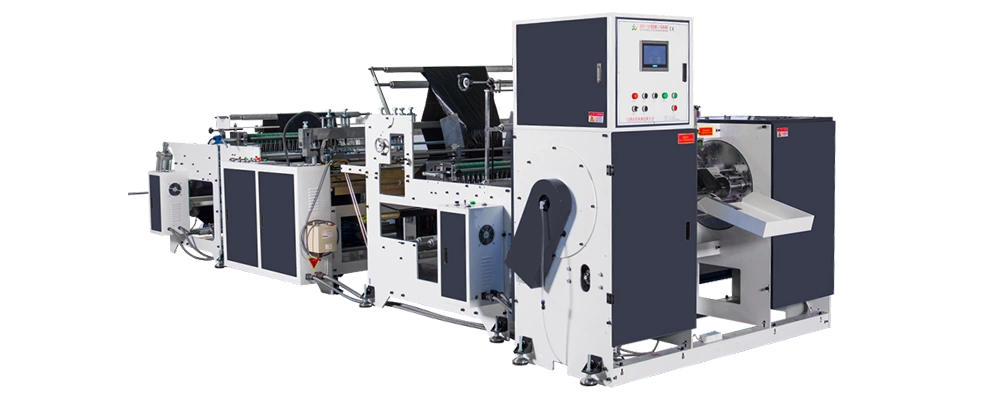
For converters producing garbage bags where seal integrity and roll quality directly affect customer satisfaction, see the garbage bags making machine line for application-specific sealing and winding configurations.
A bag on roll making machine is a long-term investment. The manufacturer's reliability, engineering capability, and after-sales support matter as much as the machine's specifications.
What to assess beyond the product catalog:
| Assessment Area | What to Look For |
|---|---|
| Experience and track record | Years in the industry — 30+ years indicate deep domain expertise |
| Manufacturing capability | Factory size (20,000+㎡), annual production capacity (600+ units), precision machining centers with CNC systems for micron-level accuracy |
| Engineering and innovation | Number of patents (30+), in-house control system integration (e.g., Delta PLC co-development) |
| Quality systems | Automated assembly workshops, integrated control systems for optimal efficiency |
| Supply chain and logistics | Smart storage hubs with digital management for rapid order processing |
| After-sales support | 24/7 remote technical support, on-site installation and commissioning, OEM spare parts availability, operator training programs |
| Global presence | Participation in international exhibitions, global partner network |
The practical takeaway: Ask potential suppliers for references from customers with similar production profiles. Visit the factory if possible. Verify that they stock spare parts for machines sold 5+ years ago — a strong indicator of long-term commitment.
Before you make your final decision, run through this complete checklist:
Step 1 — Define your bag types, film types, and weekly SKU count
Why: This determines which machine series — C-F, four-fold, fresh-keeping, drawstring, or star-seal — is right for you.
Step 2 — Match machine series to your bag types
Why: Different machines are optimized for different applications. Choose the series that aligns with your primary product mix.
Step 3 — Set your target automation level based on actual volume
Why: Over-automation wastes capital. Under-automation wastes labor.
Step 4 — Verify material compatibility with a test run
Why: Film behavior on the machine is the ultimate proof. Test with your actual materials.
Step 5 — Inspect sample rolls for seal quality, winding consistency, and changeover capability
Why: Saleable output matters more than theoretical speed. Quick changeover drives profitability in mixed-order environments.
Step 6 — Evaluate the manufacturer's experience, engineering capability, and support infrastructure
Why: The machine will need maintenance, spare parts, and technical support over its lifetime.
Once you have worked through these six steps, you will have a clear understanding of your requirements — bag types, production volume, automation needs, material compatibility, and supplier criteria. Comparing the specific specifications of available options becomes the next logical step.
The following topics extend the machine selection discussion into related technical and business decisions:
Drawstring or Star Seal Garbage Bags
Material Selection for High‑Speed Roll Bag Lines
Sealing and Cooling in Roll Bag Production



.webp)