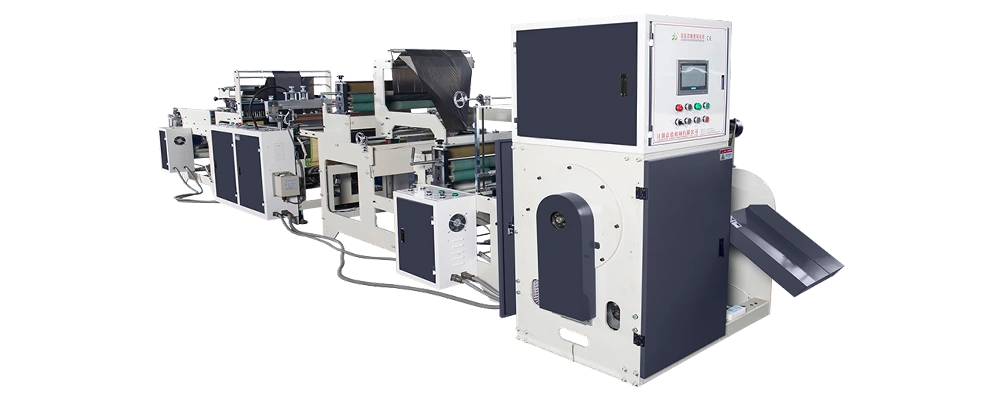
30 years leading professional manufacturer of bag-on-roll equipment in China
You run a roll bag line. Your customer asks for a new bag type — not the standard flat C-fold bag you produce, but a star seal bag, often used for heavy-duty garbage rolls. Different design. Different production setup. Different end-user value proposition.
Star seal bags are not simply a “premium” version of C-fold bags. They serve a different function: handling wet waste, distributing heavy loads evenly, and conforming to bin shapes to prevent leaks.
Before purchasing another machine, you need a framework to compare C-fold and star seal roll bag makers based on your actual order pattern — not just brochure specifications.
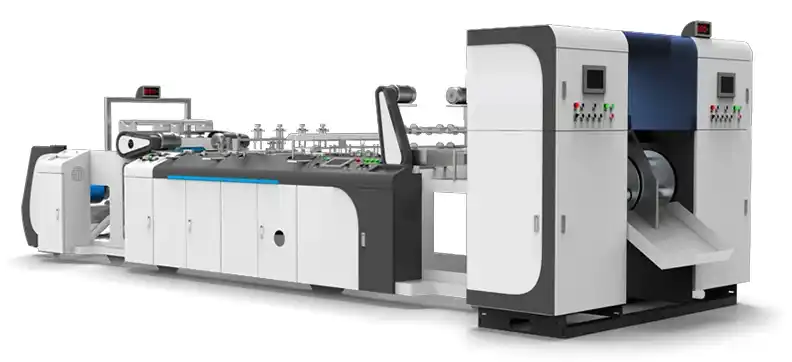
This article breaks down how the two machine types differ in changeover efficiency, material compatibility, and seal performance. It then maps each type to specific production scenarios, helping you decide which fits your mix of orders.
The choice between a C-fold roll bag maker and a star seal roll bag maker starts with understanding how the two bag types differ structurally — and what that means for your production setup.
| Feature | C-Fold Bag | Star Seal Bag |
|---|---|---|
| Seal design | Straight, flat seal across the bottom width | Gathered and sealed in a star-shaped pattern at bottom |
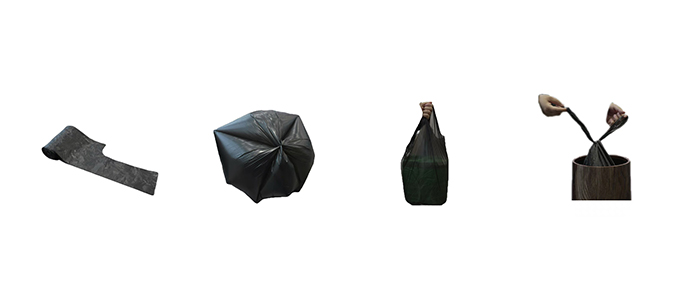
| Shape on roll | Flat, folded like “C”, compact roll | Bottom forms multiple fold lines creating “star” shape when laid flat |
| How it behaves when filled | Weight concentrates at the bottom seam; corners bear load stress | Load distributes evenly across multiple folded points; conforms to container shape |
| Primary use | Standard grocery bags, T-shirt bags, general waste liners, produce bags | Garbage bags, heavy-duty waste liners, wet waste, industrial/commercial waste |
| Leak resistance | Moderate — seal can fail at corners under wet load | Excellent — design eliminates gaps and weak corners |
| Best for | Dry waste, light to medium loads, cost-sensitive orders | Wet waste, heavy loads, food service, healthcare, industrial waste |
According to industry research on plastic bag sealing types, star seals distribute weight evenly across the seal and eliminate sharp corners where waste could collect, making them ideal for trash and garbage bags handling wet waste or heavy loads. In contrast, flat seals can leak at corners since the seal bears full load stress at concentrated points.
What this means for your production line: A C-fold machine produces standard flat-bottom garbage and shopping bags at high speed with straightforward folding. A star seal machine requires additional gathering/folding stations to create the star-shaped bottom pattern — typically resulting in lower linear speed but delivering a bag with superior leak resistance and weight distribution.
Choose between C-fold and star seal roll bag makers based on how your order book looks across these three factors.
Changeover time is the hidden killer of effective output. A machine running at 95% efficiency but taking 45 minutes to change over may produce less usable output in a shift than a machine running at 85% with 10-minute changeovers, depending on the number of SKUs you run.
C-fold roll bag makers: Generally support faster changeovers when switching between different widths or lengths of flat C-fold bags. The folding mechanism is relatively simple, reducing tooling swap time. Machines with quick-change tooling are particularly suitable for high SKU diversity with moderate volume.
Star seal roll bag makers: Require more complex changeovers. The gathering/folding station that creates the star pattern must be adjusted for different bag widths and bottom fold depths. However, when configured as a dedicated line for garbage rolls — as with the double-line configuration — star seal machines can operate as high-output production lines serving the waste management market specifically.
Decision rule: If you run a wide variety of bag types (shopping, produce, lightweight garbage), a C-fold platform with recipe storage will deliver higher usable output. If your core business is garbage rolls — especially for food service, industrial, or healthcare waste — a dedicated star seal line may be more appropriate despite longer changeover times.
Both machine types can run LDPE, LLDPE, HDPE, and recycled content blends. However, star seal bag makers place specific demands on material properties.
C-fold bag makers: Materials must fold cleanly into the C shape and maintain the fold through winding. Thinner films (8-15 microns) work well for produce and shopping bags. Heavier films (40+ microns) for garbage bags also fold reliably.
Star seal bag makers: The gathering process requires films with sufficient flexibility to create multiple bottom folds without cracking or stress whitening. According to industry sources, star seal bags use material efficiently — less film waste compared to some other designs — while achieving high strength at moderate thicknesses (20-80 microns depending on load type). LDPE and LLDPE blends generally perform better than high-stiffness HDPE for star seal applications.
Decision rule: If your primary material is HDPE for ultra-thin, low-cost shopping bags, a C-fold machine is the standard choice. If you work with LDPE/LLDPE blends for garbage bags and value material efficiency, a star seal line may offer better weight-to-film economics.
Seal strength is a quantitative measure used for process validation, process control, and capability assessment. ASTM International‘s ASTM F88/F88M Standard Test Method for Seal Strength of Flexible Barrier Materials defines the measurement of seal strength in flexible barrier materials — the same standard used to validate seals in medical device and food packaging, and for which the current active revision is ASTM F88/F88M-23.
For end customers handling wet waste (food scraps, liquids, biohazards) or heavy loads, seal integrity directly impacts satisfaction and reorder rates.
C-fold (flat seal) bags: The straight bottom seam is simple and economical to manufacture. However, weight concentrates at the seam and corners, leading to higher leak risk under wet or heavy loads. Flat seal garbage bags are best for lightweight trash and dry waste where low cost is the priority.
Star seal bags: The star-shaped bottom eliminates weak corners, distributes load evenly, and conforms to container shapes — significantly reducing leak risk. According to packaging industry research, star seal bags achieve leak resistance, uniform strength, and better container fit, making them particularly suitable for high-moisture environments like food processing plants, hospitals, and restaurants.
Decision rule: For dry waste, light loads, or cost-sensitive orders, C-fold flat seal bags are sufficient. For wet waste, heavy loads, or customers in food service, healthcare, or industrial sectors, Star Seal provides a clear performance advantage that justifies the higher per-unit production cost.
To understand how different roll bag machine platforms handle quick changeover and material flexibility, see the technical overview of bag on roll making machines with Delta-integrated control.
Below are three common packaging converter order patterns. Identify yours, then follow the recommendation.
Typical orders: 200,000+ standard shopping/T-shirt bags per SKU; 1-3 bag types per month
Priority: Sustained speed and minimal material cost
Recommendation: C-fold bag maker — simpler folding, higher sustained speed, most economical for flat seal garbage and shopping bags
Typical orders: 10,000 – 50,000 bags per SKU; many clients with different bag sizes and types
Priority: Recipe recall, fast changeover, minimal setup waste
Recommendation: C-fold bag maker with quick-change tooling and recipe storage — changeover time often determines profitability when running high SKU diversity
Typical orders: Consistent volume of garbage rolls, often in double-line production configuration; customers prioritising leak resistance and load capacity over lowest cost
Priority: Superior seal performance for wet/heavy waste, consistent bag fit in containers, material efficiency
Recommendation: Dedicated star seal bag maker — especially if garbage rolls represent 30%+ of production volume. As industry sources note, star seal bags use material efficiently and offer better long-term value for high-volume waste operations. Machines can be configured as double-line production systems for high output
Industry analysis indicates that for heavy or wet trash, star seal bags consistently outperform flat-bottom designs under weight. Businesses handling heavy or wet waste — warehouses, restaurants, commercial kitchens, industrial facilities — benefit from Star Seal's superior leak resistance and even weight distribution.
For converters serving the garbage bag market where both standard C-fold liners and star seal premium bags are applicable, see the garbage bag machine line for application-specific configurations.
Use this checklist during your internal evaluation. It removes guesswork and replaces it with your actual production data.
Why: End-use determines seal requirement. Retail/shopping bags → C-fold. Waste management/food service/healthcare → consider Star Seal.
How to document: List your top 5 customers by revenue and the waste type they handle (dry vs. wet, light vs. heavy).
Why: Changeover time multiplies by SKU count. A 30-minute changeover across 15 SKUs per week costs 7.5 hours of downtime weekly — over 350 hours annually.
How to document: Number of unique bag specifications (length, width, thickness, material type) produced in the last 30 days ÷ number of production days.
Why: If customers report leaks or bag failures, Star Seal may be the solution, even if it costs more per unit.
How to document: Return rate attributed to seal/bottom failure (number of returned rolls ÷ total rolls shipped).
Why: Star seal bags can achieve equivalent strength at moderate thicknesses with less material waste. This may offset higher production complexity.
How to document: Run a test batch of same-load-capacity bags: C-fold (flat seal) at X microns vs. star seal at Y microns. Compare material cost per 1,000 bags.
Why: A dedicated star seal machine requires sufficient volume to justify investment.
How to document: Speak with your top 5 waste management or food service customers. Ask: “Would you switch to Star Seal garbage rolls at a 5-10% premium? At what volume?”
Once you have documented the five steps above — especially end-use segment, SKU count, and waste management volume — you can translate your order profile into specific machine requirements.
| If your order profile looks like… | Then consider… | Key machine features to verify |
|---|---|---|
| Shopping bags, light retail garbage, mixed SKUs | C-fold bag maker | Recipe storage (50+ jobs), quick-change tooling, sustained speed |
| Dedicated garbage rolls, food service, healthcare | Star seal bag maker | Reliable gathering station, consistent seal formation, double-line configuration for high output |
| Both standard and premium garbage lines | Separate lines or flexible platform | Consider running C-fold for light dry waste, dedicated star seal for wet/heavy waste |
| Recycled content for garbage bags | Material compatibility testing | Documented compatibility with 20-40% post-consumer recycled content, torque control for variable melt flow |
Star seal machines are not inherently “better” than C-fold machines — they serve different applications. The C-fold machine excels at high-volume, low-cost production of standard flat-seal bags for retail and dry waste. The star seal machine addresses the specific needs of the waste management sector: leak resistance, even load distribution, and container fit.
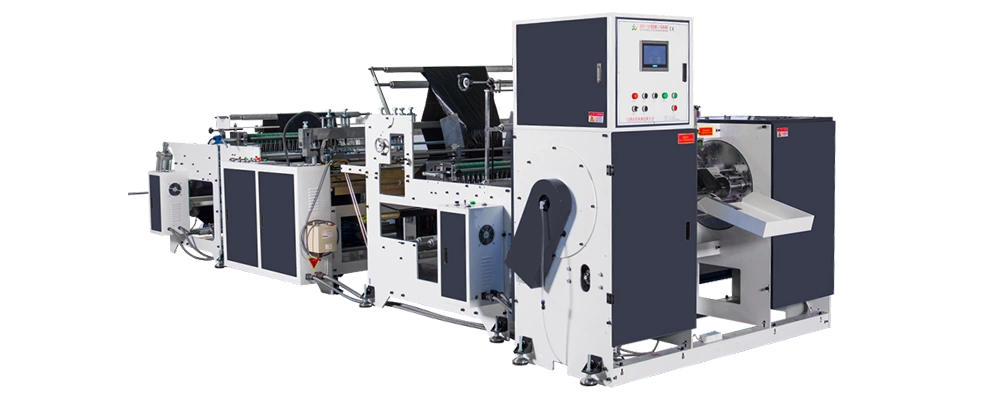
For converters planning to serve waste management customers — such as food service, healthcare facilities, and industrial operations — star seal bag on roll making machines with double-line configuration can provide high output while delivering the performance advantages that these customers require.
The following topics extend the C-fold vs star seal comparison into related technical decisions:
Material Selection for High-Speed Roll Bag Lines
Sealing and Cooling in Roll Bag Production
Drawstring vs Star Seal Garbage Bags
Perforation Quality Optimisation for Roll Bags
Quick Changeover Methods for Bag on Roll Machines




.webp)