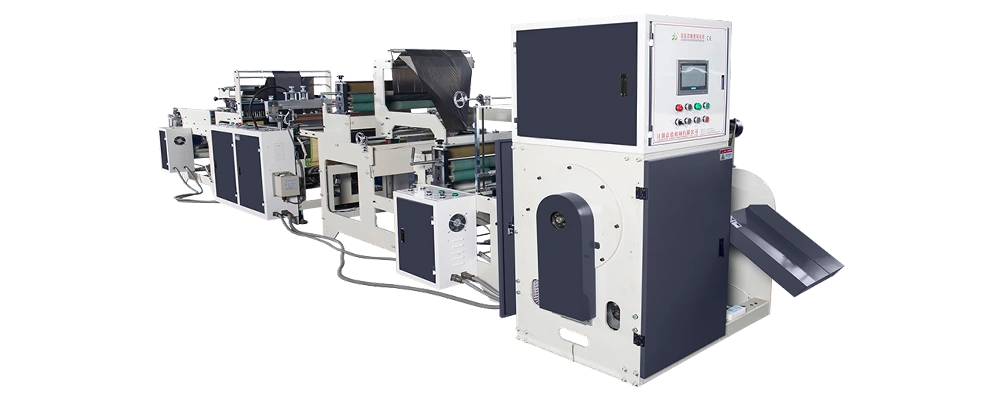
30 years leading professional manufacturer of bag-on-roll equipment in China
Two roll bags can look similar on the outside—same material, same thickness, same roll size. But the way each bag is folded and sealed at the bottom determines how it performs under weight, whether it leaks, and how it fits in a container.
C‑fold and star seal are two fundamentally different approaches to forming the bottom of a roll bag. One prioritizes compact storage and dispensing efficiency. The other prioritizes strength and leak resistance.
This article explains how each fold type is formed during production, what the formation process means for bag performance, and which applications each serves best.
Fold formation refers to how the bottom of a bag is shaped and sealed during manufacturing. This is not a cosmetic detail. The folding and sealing method determines:
How is the weight distributed when the bag is filled
Where stress concentrates — and where it is most likely to fail
How the bag conforms to different bin shapes
Whether liquids pool and leak at the bottom
According to industry literature on plastic bag sealing types, a bag‘s bottom seal determines how it handles stress, weight, and leakage. Even the thickest plastic bag will fail if its seal is poorly designed or unevenly welded.
The folding and sealing process is executed differently for C‑fold and star seal bags, and these differences start on the production line.
C‑fold trash bags are named for their distinctive “C”‑shaped fold, created during the manufacturing process. The bag is folded flat in a “C” shape, which makes it compact, easy to stack, and ideal for bulk packaging. To make the roll shorter and easier for storage, the bag is C‑folded.
The bottom of a C‑fold bag features a straight seal across the bag width — a flat seal or straight seal. This is the most traditional sealing method, where the two sides of the film are sealed straight across the bottom edge.
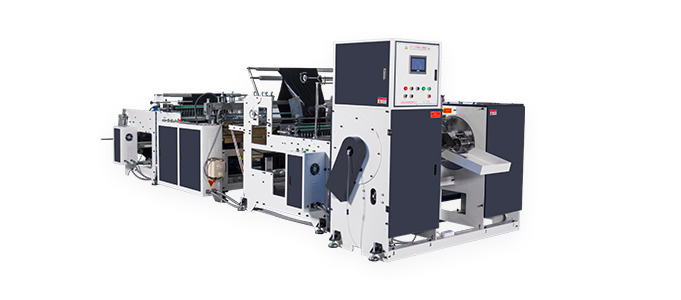
On a C‑fold bag making machine, the formation process typically follows this sequence:
Film feeding — Flat film (single web or folded) is fed through the machine
Sealing — The bottom seal is heat‑sealed across the full width
Perforation — Teeth cutting creates the perforation line between bags
C‑folding — The sealed and perforated film is folded into the “C” shape
Winding — The folded bags are wound into rolls
Some machine designs seal first, then fold and perforate last. The folding operation typically involves guide plates that fold the film into the characteristic C shape.
What this means for performance:
Advantage: Compact storage, easy dispensing, cost‑effective production
Limitation: Liquids may pool at the bottom; corners are weaker since the seal bears full load stress
Star seal bags are gathered and sealed in a star‑like shape at the bottom. According to U.S. Patent 5,941,393, a “star‑seal” is well known in the industry as a seal for securing the bottom of multiple layers of a bag so that when the bag is opened and viewed from the inside, the inside resembles a star.
The bottom is sealed like a star with multiple folds gathered together. The underside of the bag is gathered, folded, and sealed at the centre of the base of the bag.
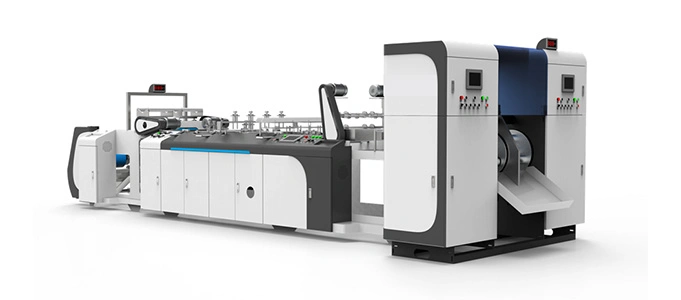
On a star seal bag making machine, the formation process follows a different sequence:
Film feeding — Tubular film is fed through the machine
Folding/gathering — The bottom of the bag is gathered into multiple folds using a specialized folding unit
Sealing — The gathered film is sealed at the center of the base, creating the star pattern
Perforation — Perforation between bags
Winding — The star seal bags are wound into rolls
Some star seal machines are designed to fold first, then seal and perforate last. A folding unit equipped with two sets of folding systems ensures precise folding and compact rolling. For gusseted bag production, the star seal formation may involve a unit with single‑folding triangles and reversing bars.
Star seal bags are made by folding multiple layers together, creating a seal that distributes weight evenly and eliminates sharp corners. They are available in various configurations, including flat bags and T‑shirt bags on a roll.
What this means for performance:
Advantage: Leak‑proof and durable; ideal for heavy, irregular loads; uses material efficiently
Limitation: Slightly higher cost per unit; not suitable for bags that require flat bottoms
| Aspect | C‑Fold | Star Seal |
| Fold shape | “C” shape — flat, compact fold | Star shape — gathered at the base |
| Bottom seal | Straight seal across the full width | Gathered and sealed at the center |
| Production sequence | Seal → perforate → fold → wind | Fold/gather → seal → perforate → wind |
| Key machine component | Guide plates and folding boards | Folding unit, gathering triangles |
| Weight distribution | Stress concentrates at corners and seal line | Weight distributed evenly across multiple folds |
| Leak resistance | Moderate — liquids may pool | Excellent — eliminates sharp corners |
| Container fit | Best for square bins | Conforms to round and square bins |
| Best applications | Dry waste, offices, light use | Restaurants, healthcare, wet/heavy waste |
The difference between C‑fold and star seal formation has practical implications for equipment selection.
For C‑fold production:
The folding mechanism is relatively simple — guide plates and folding boards
Changeovers between different bag widths are typically faster
Machines can achieve higher sustained speeds for standard flat bags
Suitable for high‑volume production of dry‑waste bags
For star seal production:
The gathering/folding unit is more complex — requiring precise adjustment for different bag widths
Changeovers take longer due to the need to adjust the gathering mechanism
Machines may have slightly lower top speed, but produce bags with superior strength characteristics
Suitable for production of wet‑waste and heavy‑duty bags
Star seal bags are specifically designed for heavier‑duty tasks, distributing weight evenly and preventing leaks and tears. They are perfect for disposing of wet or heavy waste. This makes them particularly valuable for food service, healthcare, and industrial applications where bag failure is not an option.
C‑fold bags, by contrast, are well‑suited for high‑volume environments where space efficiency and quick access are essential. They are a favorite in hospitals, hotels, restaurants, and industrial facilities.
To understand how different roll bag machine platforms handle C‑fold and star seal formation, see the technical overview of the bag on roll making machines with Delta‑integrated control.
Offices generate dry waste — paper, packaging, food wrappers. The priority is cost‑effectiveness and easy dispensing from compact rolls.
Key considerations: C‑fold bags are folded flat and compact, making them easy to store in janitorial closets and dispense from rolls or packaging systems. They are well‑suited for high‑volume waste areas where quick access is essential.
Restaurants and healthcare facilities generate wet, heavy waste. Bag failure is not just inconvenient — it creates sanitation hazards.
Key considerations: Star seal bags feature a star‑shaped seal at the bottom that allows the bag to conform more naturally to the shape of the trash can. This design distributes weight evenly and reduces stress points that can cause the bag to tear or leak. They offer superior strength and leak resistance.
For converters producing garbage bags for different waste types, see the garbage bag machine line for application‑specific configurations.
Use this framework to determine which fold type fits your order mix:
| If your customers handle… | Then the right fold type is… | Because… |
| Dry waste, paper, packaging | C‑Fold | Compact storage, easy dispensing, and cost‑effective |
| Wet waste, food scraps, liquids | Star Seal | Leak resistance, even weight distribution |
| Square bins, standard containers | C‑Fold | Fits square shapes efficiently |
| Round or irregular bins | Star Seal | Conforms to container shape |
| Light to medium loads | C‑Fold | Sufficient strength for everyday waste |
| Heavy loads, construction debris | Star Seal | Designed for heavier‑duty tasks |
The bottom line: C‑fold and star seal bags are not interchangeable. Each is optimized for different waste types, container shapes, and performance requirements. Understanding how each is formed — and what that formation means for performance — is essential for choosing the right bag for the right application.
The following topics extend the fold formation discussion into related equipment and application decisions:
Drawstring or Star Seal Garbage Bags?
Material Selection for High‑Speed Roll Bag Lines
Sealing and Cooling in Roll Bag Production
How to Choose a Bag on Roll Making Machine




.webp)