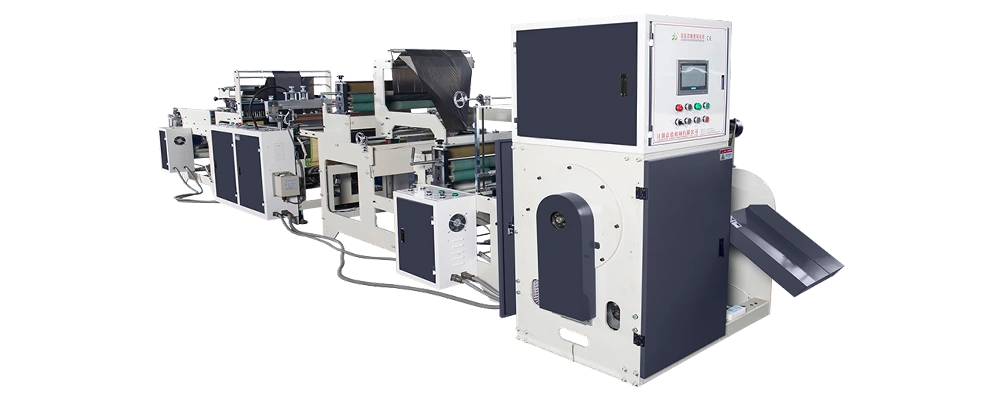
30 years leading professional manufacturer of bag-on-roll equipment in China
Walking into any flexible packaging plant, you’ll hear the same complaint from production managers: “The film ran perfectly yesterday, but today we wasted 200 meters due to edge misalignment.” For converters producing fresh-keeping roll bags, the margin for error is razor-thin. Unlike standard flat bags, these require precise micro-perforations, reliable intermittent sealing, and consistent tension control—all on thin, often slippery films.
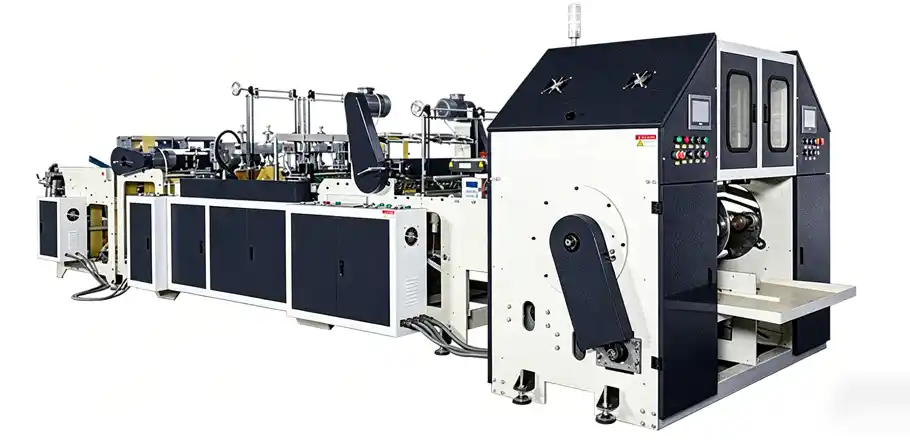
According to industry benchmarks from the Flexible Packaging Association (FPA), material waste during the bag making process can range from 3% to 8% of total input. For a medium-volume line running 24/5, that translates to thousands of dollars lost annually—not to mention the cost of rework and delayed deliveries.
When producing fresh-keeping roll bags, two technical challenges dominate the shop floor:
1. Static buildup – Thin poly films generate significant static electricity as they unwind and travel through rollers. This causes layers to stick together prematurely, leading to double feeding or film wrapping around sealing bars.
2. Tension spikes – Micro-perforated films have reduced mechanical strength along the perforation line. Even a brief 5% tension spike can stretch or tear the web, creating a cascade of rejected bags.
Experienced converting engineers know that solving these problems rarely requires a new extruder. Instead, the solution lies at the converting stage—specifically, in how the bag making machine handles film dynamics.
Let’s break down the bag making process into four checkpoints. Optimizing these zones eliminates most downtime causes.
Most jamming starts here. Your unwind shaft must provide constant, adjustable brake pressure. For thin-gauge films (below 30 microns), closed-loop tension control with a dancer roller is strongly preferred over simple mechanical brakes.
Edge misalignment of more than ±1mm will cause sealing errors. Look for an ultrasonic or pneumatic edge guide with a fast response time. For transparent or printed films, contrast-type sensors often fail—choose a system that works reliably with clear substrates.
Fresh-keeping roll bags require strong yet flexible seals. The common defect here is “false seals”—areas that look bonded but separate under light pressure. This is often caused by:
Uneven sealing bar temperature (variation of more than ±5°C)
Insufficient cooling time before rewind
Contaminated sealing surfaces (residue from anti-block additives)
For produce packaging, micro-perforations must be clean and precisely spaced. Ragged holes or inconsistent pitch will lead to customer complaints about “bags that don’t vent properly.” A servo-driven perforating unit allows on-the-fly pitch adjustments without stopping the line.
Not every bag making machine can handle the full range of fresh-keeping films. Here’s a practical reference table for purchasing or upgrading your converting line:
| Film Type | Thickness Range | Critical Machine Requirement |
|---|---|---|
| Standard PE produce film | 25–50 microns | Anti-static bars, low-inertia unwind |
| Micro-perforated film | 20–40 microns | Servo perforator, reduced sealing pressure |
| Bi-axially oriented films | 30–60 microns | High-rigidity frame, precise temperature control |
| Recycled-content films | 35–70 microns | Heavy-duty cutting blades, dust extraction |
If you are evaluating new or existing equipment to expand your product portfolio, it helps to review the technical specifications for industrial bag making systems that explicitly list compatibility with perforated and thin-gauge fresh-keeping films [review the technical specifications for industrial bag making systems].
A medium-sized packaging converter in Southeast Asia was struggling with a produce roll bag order for a supermarket chain. Their existing bag making machine produced 7% waste—mostly from seal leaks and film tearing at the perforation line.
After auditing their line, the team identified two root causes:
The edge guide sensor was too slow for transparent film
Cooling time was insufficient, causing “sticky” seals that peeled open on the rewind
They added an ultrasonic guide sensor and installed an extended cooling plate. Within two weeks, waste dropped to 2.5%, and line speed increased by 12% because operators no longer stopped frequently to clear jams.
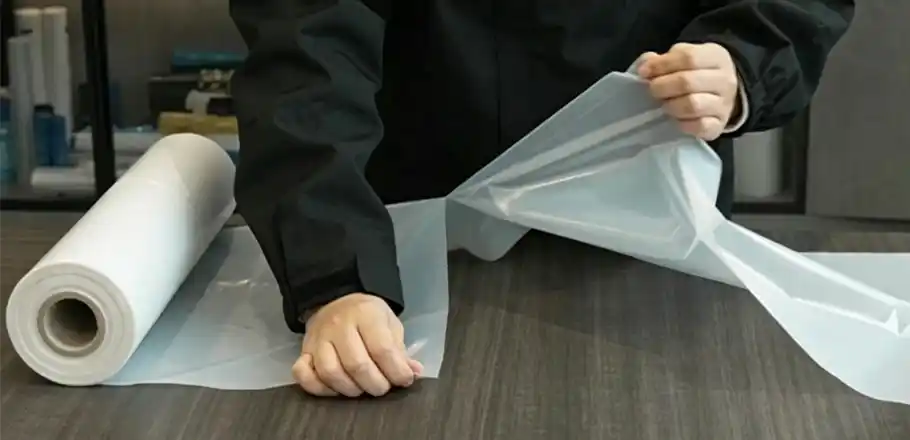
We often see packaging plants make these three errors when sourcing machinery for roll bag production:
Error 1: Ignoring the rewinding unit
The rewind section is where final roll quality is determined. Without a surface-driven rewinder with tension taper control, your finished rolls will have telescoping or soft cores—both of which will be rejected by automated packing lines.
Error 2: Under-specifying the sealing jaw width
For wide-format roll bags (over 600mm), a narrow sealing jaw creates uneven pressure across the web. Standard jaw width for produce roll bags should be at least 12mm, with independent temperature zones for left, center, and right.
Error 3: Forgetting about changeover time
If you run multiple bag widths or perforation patterns, quick-change cartridge systems for sealing and perforating dies pay for themselves within months. Downtime between jobs often exceeds 45 minutes on fixed-mount machines.
For converters looking to add high-volume fresh-keeping roll bag capacity, the difference between a profitable line and a problematic one often comes down to these specific mechanical features. You can compare machine configurations designed for roll bag production to see which options deliver the fastest job-to-job changeover.
Even the best bag making machine will drift out of optimal performance. Train your operators to watch for these early warning signs:
Intermittent seal strength – If the same machine produces good bags for 30 minutes then weak seals for 10 minutes, suspect temperature controller drift or worn sealing elements.
Gradual increase in start-up waste – When first-run waste creeps from 5 meters to 15 meters, the unwind brake may be losing calibration.
Roll edge waviness – Finished rolls with “cinching” (tight edges, loose center) indicate incorrect rewind tension taper settings.
Modern bag making machines have shifted from pneumatic controls to servo-driven systems. For fresh-keeping roll bags, digital controls offer three distinct advantages:
Recipe storage – One-touch recall of settings for different bag lengths, perforation pitches, and sealing temperatures
Real-time defect logging – Track exactly where on the roll a seal failure occurred
Predictive alerts – Notify operators when sealing bar temperature drifts beyond tolerance
If your current line lacks these features, retrofit kits are available. However, for high-volume producers, a dedicated fresh-keeping roll bag machine often yields better long-term ROI than retrofitting older general-purpose equipment.
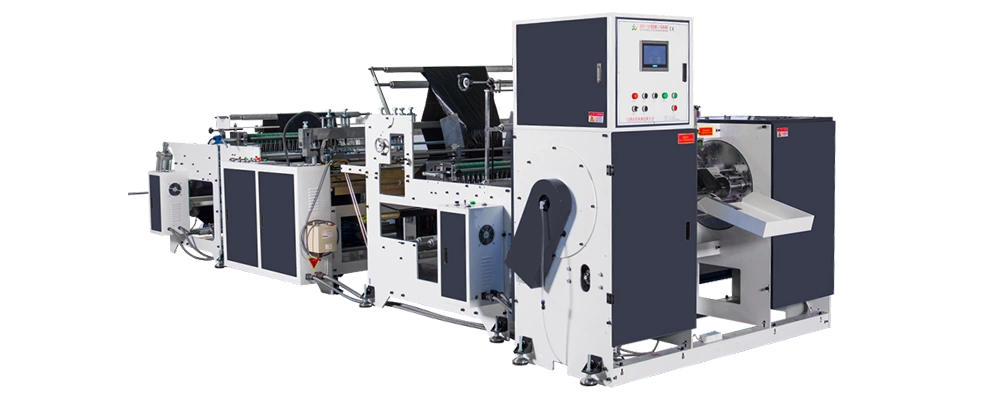
For plants ready to move beyond reactive troubleshooting and into consistent, high-yield production, you can explore the full range of fresh-keeping bag on roll machine configurations offered by specialized manufacturers [explore the full range of fresh-keeping bag on roll machine configurations].
Before starting a fresh-keeping roll bag order, run through this five-point checklist with your setup team:
Edge guide sensor calibrated for this specific film transparency
Perforation blade gap adjusted to film thickness
Sealing bar temperature profiled across all three zones
Rewind tension taper set according to roll diameter (not fixed)
Anti-static system active and grounded
One converter who adopted this checklist reported reducing setup-related waste by 60% within the first month. That’s not luck. That’s systematic preparation.
The market for fresh-keeping roll bags continues to grow as retailers and food packers shift away from rigid packaging. Converting plants that can consistently deliver leaktight, micro-perforated rolls with perfect core alignment will capture that demand. The question is: will your line be ready?




.webp)