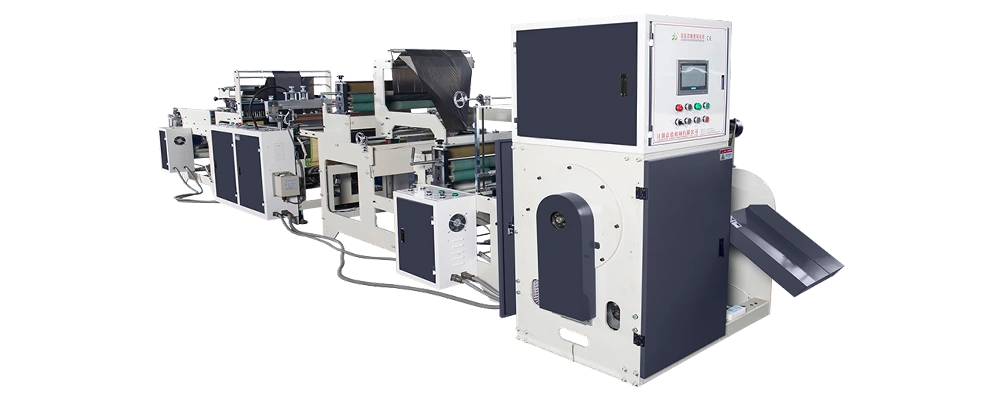
30 years leading professional manufacturer of bag-on-roll equipment in China
A packaging converter in Vietnam once made a costly assumption: “A bag is a bag. If our line runs garbage bags, it can run fresh‑keeping rolls just fine.” Eight weeks later, they had scrapped 12 tons of thin‑gauge film, replaced two sealing bars, and lost a major supermarket contract due to inconsistent perforations.
The reality is harsh but simple: equipment designed for heavy‑duty garbage bags struggles severely with lightweight fresh‑keeping films. The material properties, speed requirements, and defect tolerances sit at opposite ends of the converting spectrum.
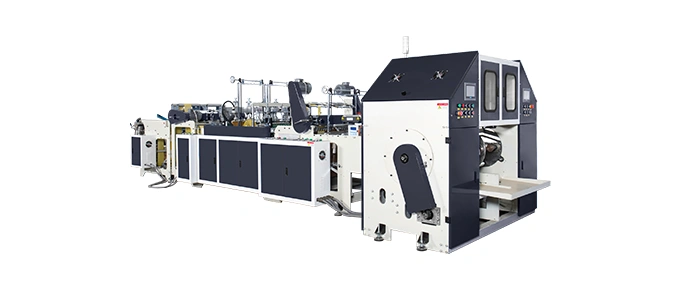
According to a 2023 technical paper from the Indian Institute of Packaging, improper machine specification accounts for nearly 35% of startup waste in flexible packaging lines. This article breaks down five critical differences between fresh‑keeping and garbage bag-on-roll equipment — helping you avoid the same costly mistake.
Garbage bag lines typically run films between 50 and 120 microns. These materials have high stiffness and tensile strength, forgiving even mediocre tension control systems. A simple mechanical brake on the unwind stand often suffices.
Fresh‑keeping roll lines operate at 20–50 microns — sometimes as thin as 15 microns for premium produce bags. At these thicknesses, the film behaves more like tissue paper than plastic. A 5% tension spike will stretch the web; a 10% spike tears it.
What this means for your line: Fresh‑keeping equipment requires closed‑loop tension control with dancer roller feedback and low‑inertia unwind shafts. Garbage bag machinery rarely includes these features as standard.
The operator’s perspective: “With garbage films, I set the brake once per shift,” explains a senior technician from a Thai packaging plant. “With fresh‑keeping film, I’m adjusting tension every roll change. A machine without automatic tension control is unusable for thin gauges.”
The sealing station is where most cross‑category failures happen.
| Parameter | Garbage Bag Equipment | Fresh‑Keeping Bag Equipment |
|---|---|---|
| Seal jaw temperature tolerance | ±10°C acceptable | ±3°C required |
| Cooling time | Often, none or minimal | An extended cooling zone is mandatory |
| Seal width | 5–8mm typical | 10–15mm with anti‑block texture |
| Common defect | Weak seals at gusset folds | False seals (look bonded, separate under pressure) |
Why the difference matters: Garbage bags tolerate heat and pressure variation. Fresh‑keeping bags must create hermetic seals that remain flexible through refrigeration cycles. Insufficient cooling causes “sticky” seals that peel open on the rewind stand — a rejection trigger for automated packing lines.
For converters planning to serve both markets, understanding these sealing requirements is essential. You can review detailed sealing system specifications for dual‑purpose converting lines to see which configurations handle both film types effectively.
Garbage bag perforations serve one purpose: tear initiation. Quality requirements are minimal — any hole that allows a clean tear passes inspection.
Fresh‑keeping perforations are entirely different. They must:
Maintain consistent diameter (typically 0.5–2.0mm)
Space precisely (pitch tolerance of ±0.5mm over 1000mm)
Leave no ragged edges (which become tear propagation points)
Allow controlled gas exchange for specific produce types
The technology gap: Standard garbage bag lines use mechanical pin perforators with fixed patterns. Fresh‑keeping lines require servo‑driven perforating units with adjustable pitch, depth control, and quick‑change tooling for different hole patterns.
A German perforation tool manufacturer notes that “ragged perforations on fresh‑keeping bags are the number one customer complaint reported by produce packers. The film looks fine to the converter, but the end user rejects every roll.”
Finished roll appearance determines whether your customer accepts or rejects an entire pallet.
Garbage bag rewind requirements:
Core alignment ±5mm acceptable
Telescoping tolerated up to 10mm
No tension taper control needed
Fresh‑keeping bag rewind requirements:
Core alignment ±2mm mandatory
Zero telescoping allowed for automated dispensers
Surface‑driven rewinding with tension taper profile essential
Why garbage bag rewinds fail for fresh‑keeping: Heavy‑duty lines often use center‑driven rewinds with fixed torque. This creates hard centers and soft edges — “cinching” that makes rolls unroll erratically in automatic dispensing systems. Produce packers using automated bag dispensers will reject rolls that don’t unwind smoothly.
For converters targeting high‑volume produce customers, rewind quality is non‑negotiable.
The garbage bag advantage: Thick films with anti‑stat additives resist clinging. Static buildup exists but rarely stops production.
The fresh‑keeping challenge: Thin, untreated films generate massive static charges. This causes:
Film clinging to sealing bars (burning holes)
Double feeding into the perforators
Operator shocks (safety issue)
Dust attraction that contaminates seals
Required solutions for fresh‑keeping lines: Active static elimination (not passive carbon brushes), anti‑static air knives at rewind, and grounded sealing components. Most garbage bag machines lack these features entirely.
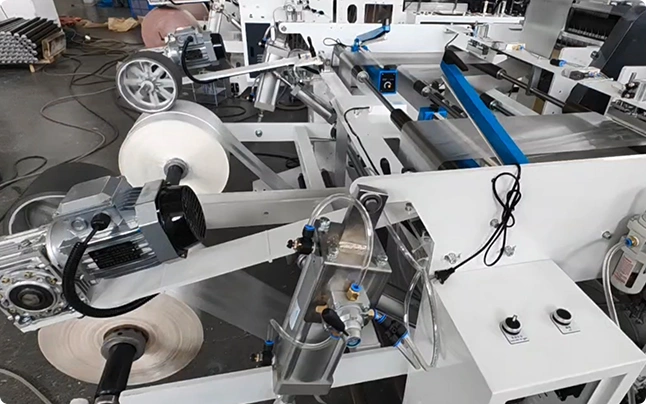
The short answer: yes, but with compromises.
A dedicated garbage bag line runs 80,000–150,000. A fresh-keeping line costs 80,000–150,000. Afresh-keeping line costs 120,000–250,000. A truly dual‑purpose line with servo tension control, quick‑change sealing dies, adjustable perforation pitch, and surface rewind sits at $180,000–300,000.
The hidden cost of “good enough”: Converters who buy garbage bag equipment to “try” fresh‑keeping orders typically waste 6–12 months and $50,000+ in scrapped film before upgrading. Those who invest in proper dual‑purpose or dedicated equipment from the start recoup costs within 18 months through higher margins — fresh‑keeping rolls sell at a 30–40% premium over garbage bags.
Choose a garbage bag dedicated to equipment if:
90%+ of your volume is heavy‑duty (50+ microns)
You have no existing produce packaging customers
Your team lacks thin‑film handling experience
Choose fresh‑keeping dedicated equipment if:
You serve or target grocery, produce, or food service markets
You need micro‑perforation capability
Roll quality and seal integrity are your brand differentiators
Choose dual‑purpose equipment if:
You run mixed volumes of both products
Your operators have thin‑film experience
You’re willing to invest 20–30% more upfront for flexibility
For converters ready to evaluate specific machine configurations, you can explore the full range of bag-on-roll converting solutions designed for both fresh‑keeping and garbage bag applications.
Fresh‑keeping and garbage bags share a basic format — rolls of connected bags. But their production requirements diverge completely in tension control, sealing precision, perforation quality, rewind consistency, and static management.
Choosing the wrong equipment path doesn’t just waste film. It wastes months of production time, damages customer relationships, and traps you in a segment you can’t serve profitably.
Before your next equipment purchase, audit your target markets honestly. Then match the machine to the application — not the other way around.



.webp)