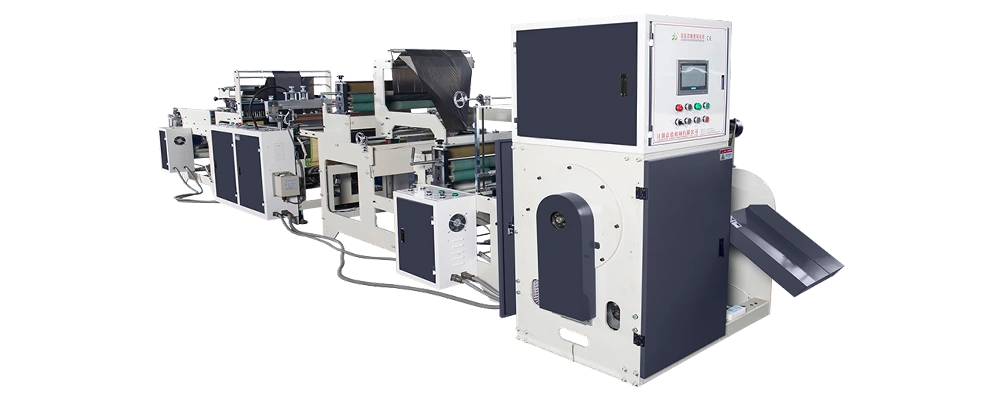
30 years leading professional manufacturer of bag-on-roll equipment in China
A packaging converter in Malaysia recently shared a lesson from their production floor. They had been making standard flat trash bags for years. When a waste management company asked for the same bags on rolls, the converter assumed the process would be nearly identical. The first batch passed internal inspection. The customer rejected it because the perforations tore inconsistently when pulled from the dispenser.
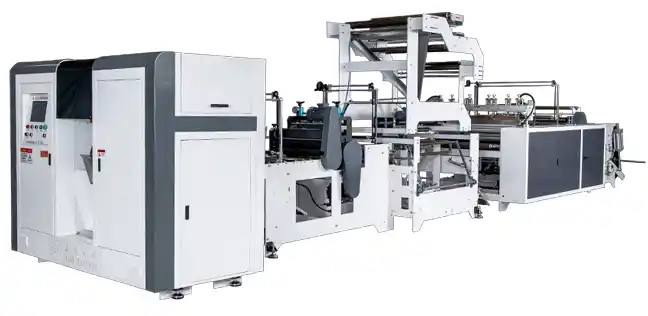
This situation is not unusual. According to a 2020 survey by the Flexible Packaging Association, converters expanding into roll bag formats typically encounter a learning curve of 3–6 months before achieving consistent quality. The core challenges usually involve three areas: perforation consistency, seal strength for heavier loads, and roll winding for smooth dispensing.
This article outlines practical production considerations for manufacturing garbage bags on roll that meet waste management customer expectations.
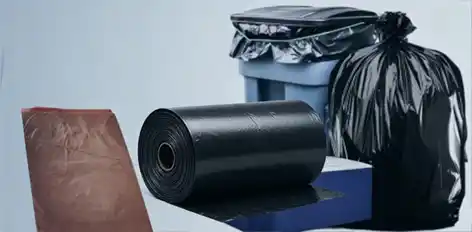
Garbage bags on roll are used differently than standard flat trash bags. A flat bag is pulled individually from a box. A roll bag is torn from a continuous roll mounted on a dispenser — often in settings like office buildings, hotels, or commercial kitchens where staff need quick access.
This difference creates three distinct production requirements:
Perforations must tear cleanly with one hand
Seals must hold heavier, sometimes wet waste
Rolls must unwind without jamming or telescoping
Garbage bags are typically made from low-density polyethylene (LDPE) or linear low-density polyethylene (LLDPE). The material choice affects both bag performance and how easily it processes on a roll line.
Common material options:
| Material | Typical Thickness | Characteristics |
|---|---|---|
| LDPE | 50–80 microns | Softer feel, good tear properties, moderate strength |
| LLDPE | 40–70 microns | Stronger, more puncture-resistant, slightly stiffer |
| Blended | 45–75 microns | Balance of strength and tear consistency |
What matters for roll production: Stiffer films (higher LLDPE content) require more precise perforation settings. If the perforation is too shallow, the bag won't tear cleanly. Too deep, and the bag may tear during winding or shipping. Running test samples with the actual film before full production is recommended.
For converters selecting materials for roll bag production, you can review material compatibility guidelines for continuous roll bag lines to understand how different film properties affect processing.
The perforation is the most critical feature of a garbage bag on roll. Waste management customers report that inconsistent tearing is their top complaint.
Typical perforation parameters observed in production:
| Parameter | Typical Range |
|---|---|
| Perforation tear force | 3–6 Newtons |
| Perforation spacing tolerance | ±0.5 mm over 500 mm |
| Bag length consistency | ±3 mm per bag |
Practical adjustment tips:
If bags tear too easily (premature tearing): Reduce perforation blade depth slightly. Increase by 0.1–0.2 mm increments and retest.
If bags are difficult to tear: Increase blade depth. Also check blade sharpness — dull blades create ragged perforations that require more force to separate.
If tear lines are inconsistent across the roll width: Check that the perforator blade is parallel to the backup roller. Even a 0.5 mm angle difference can cause one side to tear differently than the other.
Running a 100-bag test sample and having an operator tear each bag by hand is a simple but effective quality check before full production.
Garbage bags carry heavy, sometimes sharp or wet contents. The bottom seal must be reliable.
Common seal issues in roll bag production:
Intermittent weak seals: Temperature fluctuations or uneven pressure along the sealing bar. The seal may hold for 50 bags then fail for 5 bags before working again.
Gusset seal problems: Many garbage bags have side gussets (folded edges) to allow expansion. The seal area has two layers at the edges and four layers at the gusset fold. Without sufficient heat at the thicker sections, the gusset area may seal poorly.
What helps:
Sealing bars with separate temperature control for left, center, and right zones
Cooling section after sealing to let the seal set before winding tension is applied
Regular cleaning of sealing surfaces — resin buildup reduces heat transfer
A simple field test: After production, fill sample bags with 5–8 kg of damp sand or similar weight. Lift and shake each bag. Any seal failure indicates a problem that needs correction before shipping.
For production managers evaluating sealing system capabilities, you can compare sealing station configurations for heavy-duty roll bag manufacturing to identify features suited for garbage bag production.
The finished roll must unwind consistently when loaded into a dispenser. Two common winding defects cause customer complaints:
Telescoping: Roll layers shift sideways, creating a stepped edge. This prevents the roll from turning freely in the dispenser. Acceptable core alignment tolerance is typically ±2–3 mm.
Roll soft spots: Inconsistent winding density creates sections where the roll is softer. When the dispenser pulls film, the soft section may feed unevenly, causing the bag to twist or jam.
Practical winding guidelines:
Use surface-driven rewinding rather than center-driven for better layer consistency
Apply tension taper — reduce winding tension as roll diameter increases
Check finished rolls by rolling them on a flat surface; any wobble indicates winding issues
A note on core quality: The cardboard or plastic core must be straight and have clean edges. A bent core will cause winding problems regardless of other settings.
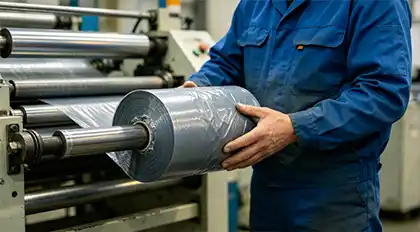
Waste bags are often used for sharp objects — broken glass, metal cans, construction debris. Puncture resistance matters.
Factors affecting puncture resistance:
Film thickness (microns)
LLDPE content (higher LLDPE improves puncture resistance)
Consistent material distribution (no thin spots)
A simple quality check: After production, press a blunt object (like a pen cap) against sample bags with moderate force. Check for visible thinning or puncture. This is not a laboratory test but gives a rough indication of consistency.
Bag making machines have rated speeds. Running at maximum speed often increases defect rates.
A typical example from production floors: A converter running 60-micron blended film at 90 cycles per minute reported 96% first-pass yield. Increasing to 110 cycles per minute dropped yield to 91%. The additional speed added 22% more output but doubled the rework needed.
For garbage bags on roll, consistent quality matters more than maximum speed. Most waste management customers would rather receive slightly fewer rolls per week than deal with high rejection rates.
Issue: Inconsistent bag length
Check perforator pitch settings
Verify film tension is stable across the line
Check for worn drive components
Issue: Seals fail under light load
Check actual sealing bar temperature with a contact thermometer (machine readings can be off by 5–10°C)
Ensure cooling time is sufficient before winding
Clean sealing surfaces
Issue: Rolls telescope
Reduce winding tension, especially as roll diameter increases
Check that core is straight and properly mounted
Verify edge guide is functioning
Issue: Perforations tear diagonally
Check perforator blade alignment (should be parallel to roller)
Inspect blade for wear or damage
Before releasing a production run for garbage bags on roll, consider these basic checks:
Pull 10–15 bags from the beginning, middle, and end of the run
Test each bag by hand to confirm tear consistency
Fill 5 bags with 5 kg of test weight and lift to check seals
Roll a finished roll across a flat table to check for wobble
Unwind 20–30 bags from a finished roll to confirm smooth dispensing
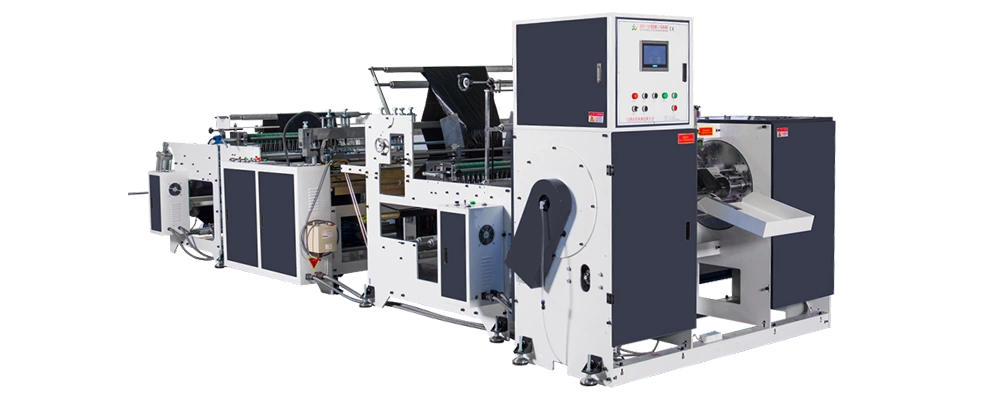
Producing garbage bags on roll requires specific machine capabilities that not all bag making equipment includes:
Adjustable perforation depth for different film thicknesses
Multi-zone sealing temperature control for gusseted bags
Surface rewinding with tension taper for consistent roll density
Cooling section to set seals before winding
General-purpose bag machines sometimes lack one or more of these features. Converters planning regular roll bag production often find dedicated roll lines more efficient in the long term.
If you are assessing your current line capabilities or planning an equipment upgrade, you can explore bag on roll production line configurations designed for garbage bag applications.



.webp)