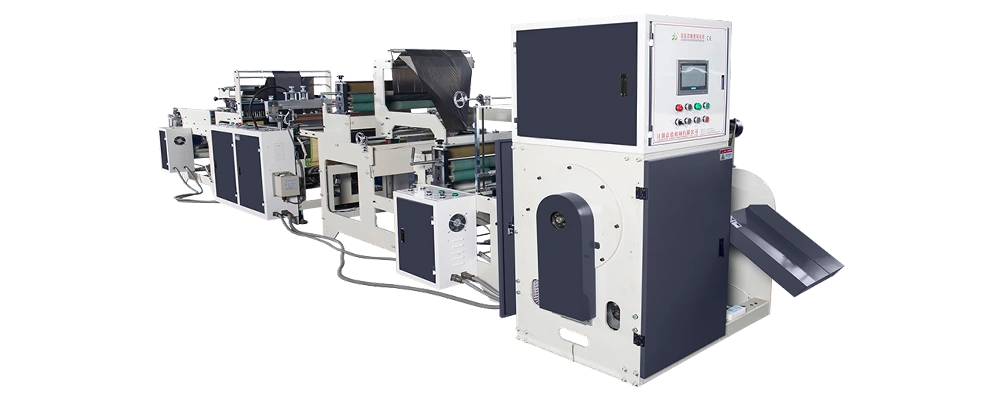
30 years leading professional manufacturer of bag-on-roll equipment in China
A medium-sized packaging converter received its first order for shopping bags on roll last quarter. The order volume was modest — 50,000 rolls for a local retail chain. The converter had been producing flat bags for years and assumed roll bags would be similar. After delivery, the customer returned 15% of the rolls due to inconsistent perforations and telescoping issues.
This scenario is common. According to a 2021 industry survey by the Flexible Packaging Association, converters entering the roll bag market typically face initial rejection rates between 5–12% while adjusting their processes.
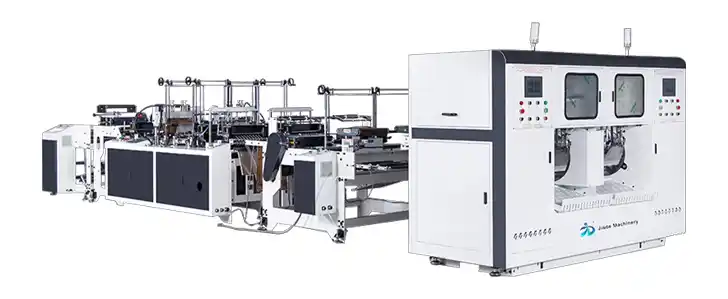
This article outlines the practical production requirements for manufacturing shopping bags on a roll that consistently meet retail expectations.
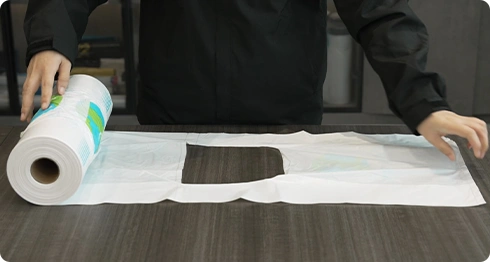
A shopping bag on a roll is a continuous chain of connected bags wound around a core. Each bag is separated by a perforation line. Cashiers tear off one bag at a time as needed. The format is simple, but producing it consistently requires attention to several details.
The three core elements that determine roll bag quality are:
Perforation consistency
Seal integrity
Roll winding quality
The perforation line must be strong enough to hold the bag on the roll during shipping and handling, but weak enough for a cashier to tear off easily with one hand.
Typical specifications observed in the industry:
| Parameter | Typical Range |
|---|---|
| Perforation tear force | 2.5–4.5 Newtons |
| Perforation pitch variation | ±0.5 mm over 1 meter |
| Bag length variation | ±2 mm |
Practical considerations: The perforating unit should allow operators to adjust blade depth. Films vary in thickness and material stiffness. A setting that works for 35-micron PE may not work for 25-micron or recycled-content films. Running a short test batch before full production helps verify perforation settings.
Shopping bags need to hold typical retail items — groceries, clothing, and household goods. The bottom seal is the most common failure point.
Seal defects to watch for:
Intermittent weak seals: These occur when the sealing bar temperature fluctuates or when the sealing pressure is inconsistent. The result is a bag that holds during initial packing but separates later.
Gusset seal issues: For bags with side gussets (the folded edges that allow the bag to expand), the seal area has varying thickness — two layers at the edges and four layers at the gusset fold. Without proper heat distribution, the thicker sections may not seal completely.
What helps: Sealing bars with independent temperature zones (left, center, right) can compensate for thickness variations. A cooling bar after the seal station also helps by allowing the seal to set before tension is applied during winding.
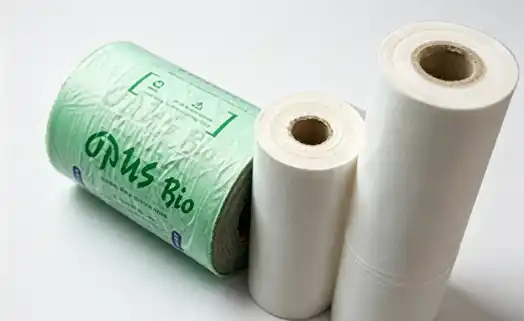
If you are evaluating sealing system features for your production line, you can compare sealing station specifications for roll bag manufacturing to identify which configurations address gusset seal challenges.
The finished roll must unwind smoothly when loaded into a retail dispenser. Two common winding defects cause problems:
Telescoping: This occurs when layers of the roll shift sideways, creating a stepped appearance. Telescoping rolls jam in dispensers. Typical acceptable tolerance is ±2–3 mm of core alignment.
Soft or hard spots: Rolls with inconsistent winding density create uneven unwinding tension. Soft spots may cause the roll to stall; hard spots may cause jerky unwinding.
Practical winding guidelines:
Use surface-driven rewinding for better layer-to-layer consistency
Apply tension taper (reducing tension as roll diameter increases)
Check roll hardness with a basic durometer — consistent readings across the roll width indicate good winding
Retailers increasingly ask for bags with recycled content or compostable materials. These films have different processing characteristics than standard polyethylene.
Common observations from production floors:
| Material Type | Typical Observations |
|---|---|
| 30% PCR content | Slightly higher gel content; blades may need more frequent replacement |
| Compostable (PLA-based) | Lower melting point; reduce sealing temperature by 10–15°C |
| Thin-gauge PE (under 30 microns) | More tension-sensitive; use closed-loop tension control |
The key is testing. Before running a full production order for a new material, run 500–1,000 meters and inspect perforations, seals, and roll quality.
Most bag-making machines have a rated maximum speed. Running at that maximum often increases defect rates.
A typical example: A converter running 40-micron PE film at 100 cycles per minute reported a 97% first-pass yield. Increasing to 120 cycles per minute dropped yield to 92%. The additional 20 cycles added 20% more output but doubled the rework required.
Finding the optimal speed for your specific film and bag dimensions is a process of gradual adjustment rather than running at maximum from the start.
Issue: Inconsistent bag length
Check perforator pitch settings
Verify film tension is stable
Check for worn drive belts or rollers
Issue: Seals fail when tested
Check sealing bar temperature with a contact thermometer (built-in readings can be inaccurate)
Verify cooling time is sufficient
Clean sealing surfaces — residue buildup affects heat transfer
Issue: Rolls telescope
Reduce winding tension, especially as roll diameter increases
Check core alignment on the rewinder shaft
Verify edge guide is functioning correctly
Before releasing a production run, consider these basic checks:
Pull 5–10 bags from the start, middle, and end of the run
Test seal strength by pulling the seal apart with your hands — it should resist before tearing
Check bag length consistency across the roll
Inspect roll edges for evenness
Unwind a few bags from a finished roll to confirm smooth dispensing
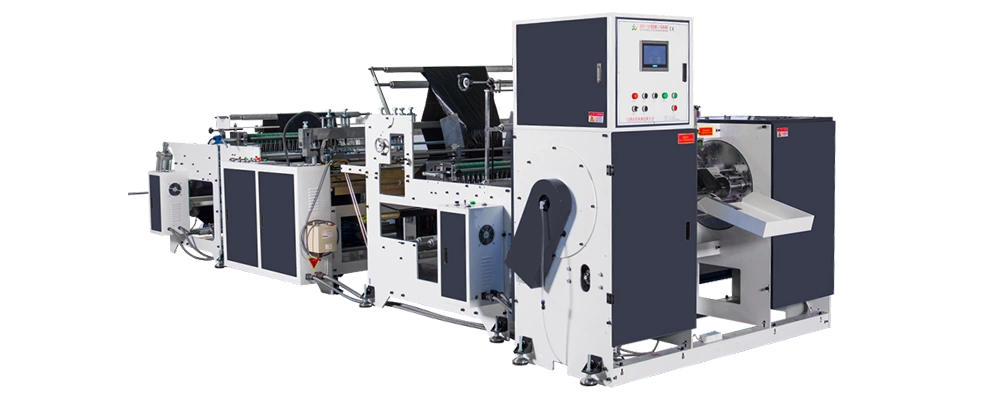
Producing shopping bags on roll requires specific machine features: servo-driven perforation, multi-zone sealing temperature control, and surface rewinding with tension taper. General-purpose bag-making machines may lack some of these features.
For production managers assessing their current line capabilities or planning an upgrade, you can explore bag-on-roll production line configurations that include these features as standard options.



.webp)