30 years leading professional manufacturer of bag-on-roll equipment in China
Your roll bag line runs standard C‑fold and star seal bags for grocery and waste customers. Then a supermarket client asks for U‑shaped produce bags. Another retail customer wants S‑bags for merchandise. Different shapes. Different perforation patterns. Different end‑user dispensing requirements.
Adding custom bag formats expands your addressable market — but also adds complexity to changeovers, material selection, and winding quality.
This article explains how U‑shaped and S‑bags on roll differ structurally, where each is used, and what production capabilities you need before committing to either format in your order mix.
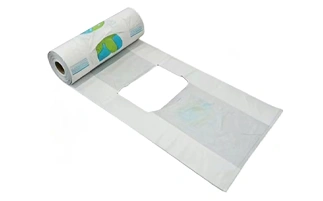
U‑shaped and S‑bags on roll are specialty roll bag formats designed for specific retail and produce dispensing environments. While both are perforated and wound on rolls, their cutout designs and opening mechanisms differ.
Key structural differences:
| Feature | U‑Shaped Bag on Roll | S‑Bag on Roll |
|---|---|---|
| Cutout shape | U‑shaped die‑cut at the top of the bag opening | S‑shaped or contoured cutout pattern |
| Opening mechanism | Handles or opening edges formed by the U cutout | Typically features a notched or profiled opening for easier separation |
| Typical use | T‑shirt style produce bags, supermarket roll bags with handles | Specialty produce bags, merchandise bags, grocery roll bags |
| Perforation placement | Below the U cutout, between bags on the roll | Integrated with the contoured cutout design |
| Dispensing method | Pulled from roll, torn at perforation, then opened via the U‑cut handles | Pulled from roll, torn, and opened via S‑shaped tear initiation |
What this means for your product line: U‑shaped bags are essentially T‑shirt style bags on a roll — combining the convenience of roll dispensing with the handle format familiar to retail shoppers. S‑bags typically feature a contoured opening designed for easier finger grip and faster bag opening in high‑volume packing environments.
Search results for U‑shaped bag applications indicate that the U shape of the bag provides a stable and convenient structure for carrying items securely, and these bags are widely used in retail, grocery stores, and other industries for packaging products. S‑bags on roll, in contrast, are commonly used as produce bags in supermarkets, grocery stores, and retail packaging environments where quick packing and convenient handling are important. The perforated roll design allows bags to be torn off easily and accurately, keeping production rolling.
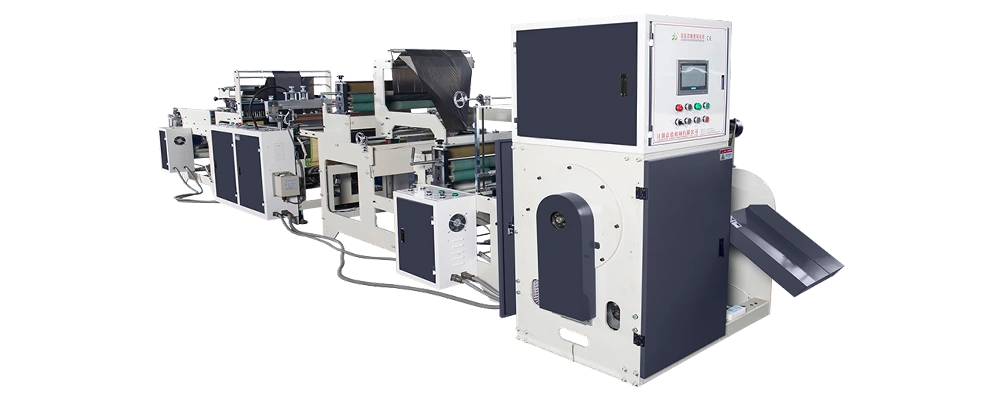
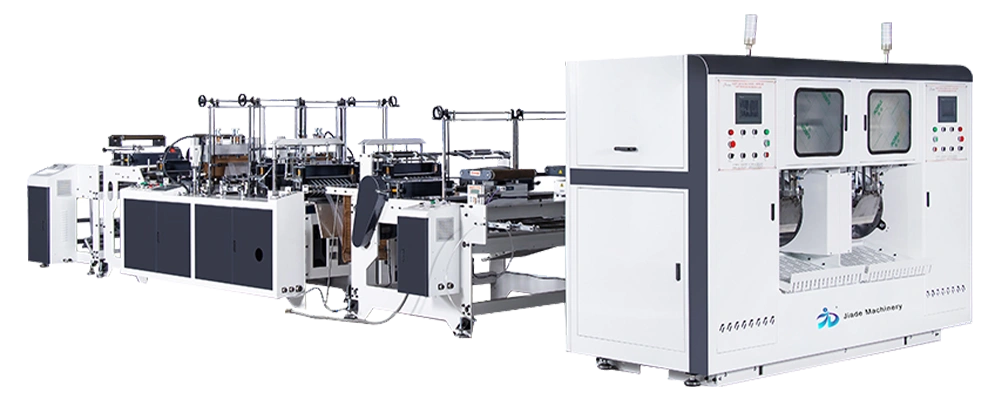
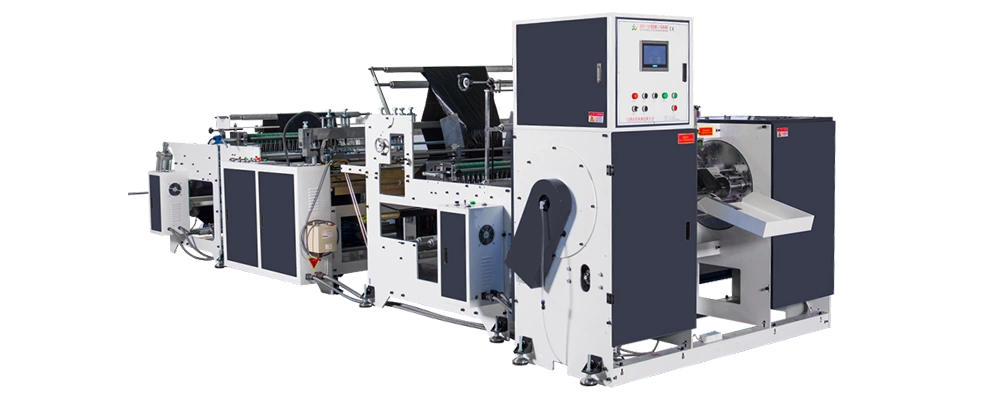
For converters already producing standard C‑fold and star seal bags, adding specialty roll bag formats requires a machine platform that supports quick changeover. See the technical overview of bag on roll making machine with quick‑change capability and Delta‑integrated control.
Producing U‑shaped and S‑bags on a roll is not simply “C‑fold with different cutters.” Specialty formats introduce three distinct production requirements.
The U‑shaped die‑cut at the top of the bag must be precisely positioned relative to the bottom seal and perforation line. Misalignment creates unusable bags — customers cannot open the bag properly, or the cut interferes with the seal.
What the equipment must support: Precision die‑cutting with registration accuracy better than 1mm, synchronized with the bag length and perforation index.
Why it matters: A U‑shaped cut that drifts across the roll creates variable handle sizes, leading to customer complaints and rejected orders.
Production implication: Unlike flat C‑fold bags that only require sealing and perforating, U‑shaped bags require an additional die‑cutting station with independent registration control.
U‑shaped and S‑bags have different physical profiles across the roll width due to their cutouts. The center of the roll may have lower material density than the edges after the die‑cut removes plastic.
What the equipment must support: Automatic tension adjustment that compensates for variable roll profile, preventing loose winding or telescoping.
Why it matters: Uneven winding leads to jammed dispensers in supermarkets — a direct source of end‑user frustration and lost repeat business.
Production implication: Machines without closed‑loop tension control will produce unsatisfactory rolls for heavily profiled bags.
Where the die‑cut meets the perforation line is the most mechanically stressed point on the bag. If perforation strength is too high, bags do not separate cleanly. If too low, bags tear prematurely during dispensing.
What the equipment must support: Independent control of perforation depth or pattern, especially at the intersection with die‑cut geometry.
Why it matters: For produce bag applications in supermarkets, customers tear multiple bags rapidly during peak checkout periods. Unreliable perforation slows workflow and creates waste.
Production implication: Specialty roll bag formats often require custom perforation tooling and adjustable perforation pressure settings beyond what standard C‑fold lines offer.
Understanding where these bags are actually used helps you decide which formats deserve investment in your facility.
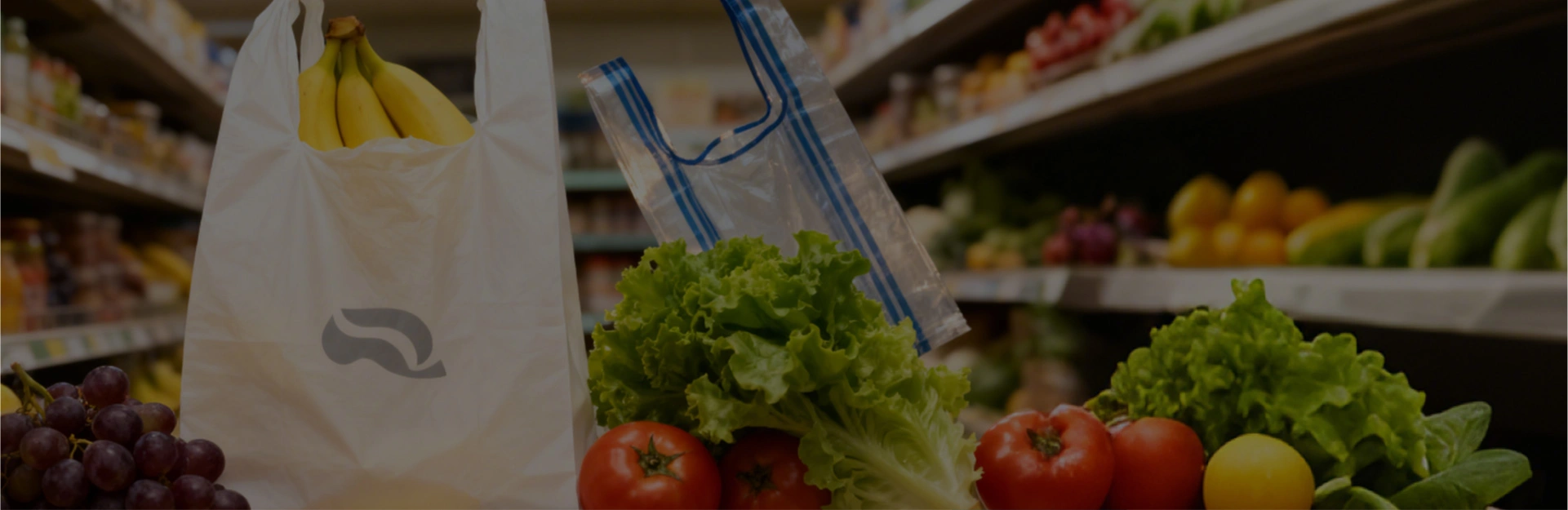
U‑shaped bags on roll are commonly used as produce bags in supermarkets, where customers need a bag with handles for carrying fruits and vegetables to checkout. The U cutout creates a T‑shirt style handle while the roll format allows the store to mount the bag roll at the produce scale for easy dispensing. U‑shaped bag applications include grocery stores, retail produce sections, and food service operations requiring handled bags in roll format.
S‑bags on roll are widely used in general retail settings — hardware stores, pharmacies, convenience stores — where customers need a bag that opens easily and dispenses reliably from a countertop or wall mount. The S‑shaped cutout is designed to provide a finger‑accessible opening point, making the bag easier to pull open when hands are full or gloved. These bags are used as industrial packing bags, laundry bags, vegetable grocery bags, and general grocery bags.
Specialty roll bags are used in deli counters and prepared food sections where staff need to bag items quickly with one hand. The contoured opening of S‑bags reduces the time spent “opening” the bag before loading.
Smaller‑scale fresh produce sellers often prefer U‑shaped roll bags because the handles make carrying multiple items easier for customers walking through market settings. The roll format saves counter space compared to stacks of flat bags.
Both U‑shaped and S‑bags are used for packaging bulk items in warehouse and distribution environments where roll dispensing improves packing line efficiency. This is particularly relevant for converters serving e‑commerce fulfillment operations.
The flexible packaging market continues to expand as converters invest in equipment that can handle diverse bag styles and sustainable materials. Industry analysts project sustained demand for multi‑product packaging lines that can accommodate specialty formats without dedicated capital for each bag type.
For converters looking to produce specialty roll bags for retail applications, the same equipment platforms that handle U‑shaped and S‑bags also support produce, grocery, and merchandise formats. See the Special Purpose Bag Making Machine line for application‑specific configurations.
Use this checklist during your internal evaluation. The key is quantifying actual demand before investing in die‑cut tooling and machine adjustments.
Why: Specialty formats are customer‑driven. If your existing customers do not request U‑shaped or S‑bags, new customers in those segments may not be worth the changeover cost.
How to document: Ask each of your top 10 customers: “Do you currently purchase U‑shaped or S‑bags on roll? From whom? At what annual volume?”
Why: Adding a new bag format to your mix increases changeover time unless you have dedicated tooling or quick‑change systems.
How to document: Multiply your current changeover time by your estimated weekly specialty bag runs. If changeover costs exceed the margin on specialty orders, the format does not fit.
Why: U‑shaped and S‑bag dies are not off‑the‑shelf for all bag widths. Lead times for custom die tooling can range from 2 to 8 weeks.
How to document: Contact your machine manufacturer or tooling supplier for a quote and delivery timeline for the specific bag dimensions your customers request.
Why: Specialty formats demand perforation control at the cutout intersection. Your current line may not have independent perforation depth adjustment.
How to document: Run a test batch of U‑shaped bags with your existing perforation system. Measure the tear force and observe whether separation occurs at the perforation or at the die‑cut edge.
Why: Custom die tooling costs are amortized across production volume. Low‑volume specialty orders may not cover the tooling investment.
How to document: Annual specialty bag volume (bags/year) ÷ tooling cost. Calculate the number of bags needed to recover the tooling investment at your standard margin.
Once you have documented the five steps above — especially customer demand, changeover cost, tooling availability, and annual volume — you can determine whether adding U‑shaped or S‑bag production fits your operation.
| If your evaluation shows… | Then consider… | Key machine features to verify |
|---|---|---|
| Strong customer demand (5+ customers, 1M+ bags/year) | Adding die‑cut capability to your main line | Precision registration control, quick‑change die mounting, integrated perforation adjustment |
| Moderate demand (1‑3 customers, 300K‑1M bags/year) | A dedicated specialty format line or convertible machine | Recipe storage for different die cuts, tooling changeover under 30 minutes |
| Occasional or trial demand (under 300K bags/year) | Outsourcing specialty formats or using a modular conversion kit | Verify that outsourcing partners can meet your quality and delivery requirements |
| Primarily produce bag applications | U‑shaped bag tooling with produce‑appropriate perforation | Food‑grade material compatibility, consistent roll winding for supermarket dispensers |
| General merchandise and grocery | S‑bag tooling with easy‑open cutout design | Finger‑accessible opening feature, reliable perforation at high dispensing speed |
Specialty roll bag formats are not inherently “better” than standard C‑fold bags — they serve specific retail dispensing applications that value handle convenience (U‑shaped) or easy opening (S‑bags) over lowest‑per‑bag cost.
For converters already serving supermarket and retail customers, adding U‑shaped or S‑bags on roll can differentiate your product line without requiring an entirely new machine — provided your existing platform supports precision die‑cutting, variable winding tension, and adjustable perforation tooling.
If your evaluation indicates that specialty formats make sense for your business, the next step is verifying that your roll bag machine can accommodate the required tooling and control features without sacrificing changeover speed for your core C‑fold production.
The following topics extend the specialty roll bag discussion into related equipment and material decisions:
Material Selection for High‑Speed Roll Bag Lines
Sealing and Cooling in Roll Bag Production
Perforation Quality Optimization for Roll Bags
Quick Changeover Methods for Bag on Roll Machines



.webp)